

My Beagle Maple turned 11 last spring, and somewhere around her 10th birthday I started noticing the thing every senior-dog owner eventually notices: the morning shuffle. She'd get up from her bed stiff, take a few careful steps toward the back door, and not really loosen up until she'd been moving for ten or fifteen minutes. Nothing dramatic. No limping, no crying out. Just a slower, more careful version of the dog who used to bulldoze her way to the food bowl the second she heard the bag crinkle.
I mentioned it to our vet at her annual checkup, and she suggested trying a glucosamine and chondroitin supplement before we looked at anything more involved. Cosequin came up first because it's the brand she sees most often in her own practice, and because I'd already seen it recommended more than once in the senior-dog forums I lurk in when I can't sleep. I bought the 132-count chewable tablets, mostly expecting a mild, gradual result if anything at all. I've been burned before by supplements that promised a lot and did very little, so I went in with low expectations. Six months later, I have a pretty clear picture of what it did and didn't do for her, and I want to walk through the whole thing honestly, including the parts where I genuinely wasn't sure it was doing anything.
The Quick Verdict
A well-tolerated, genuinely easy daily habit that coincided with a real, gradual improvement in Maple's morning stiffness. Not a miracle fix, and I can't prove it wasn't partly the extra walks, but I'm not stopping.
Amazon Check Today's Price →Curious if the same chewable would fit your dog's routine?
Check today's price and current availability for the Cosequin 132-count chewable tablets on Amazon before you decide.
Amazon Check Today's Price on Amazon →How I've Used It
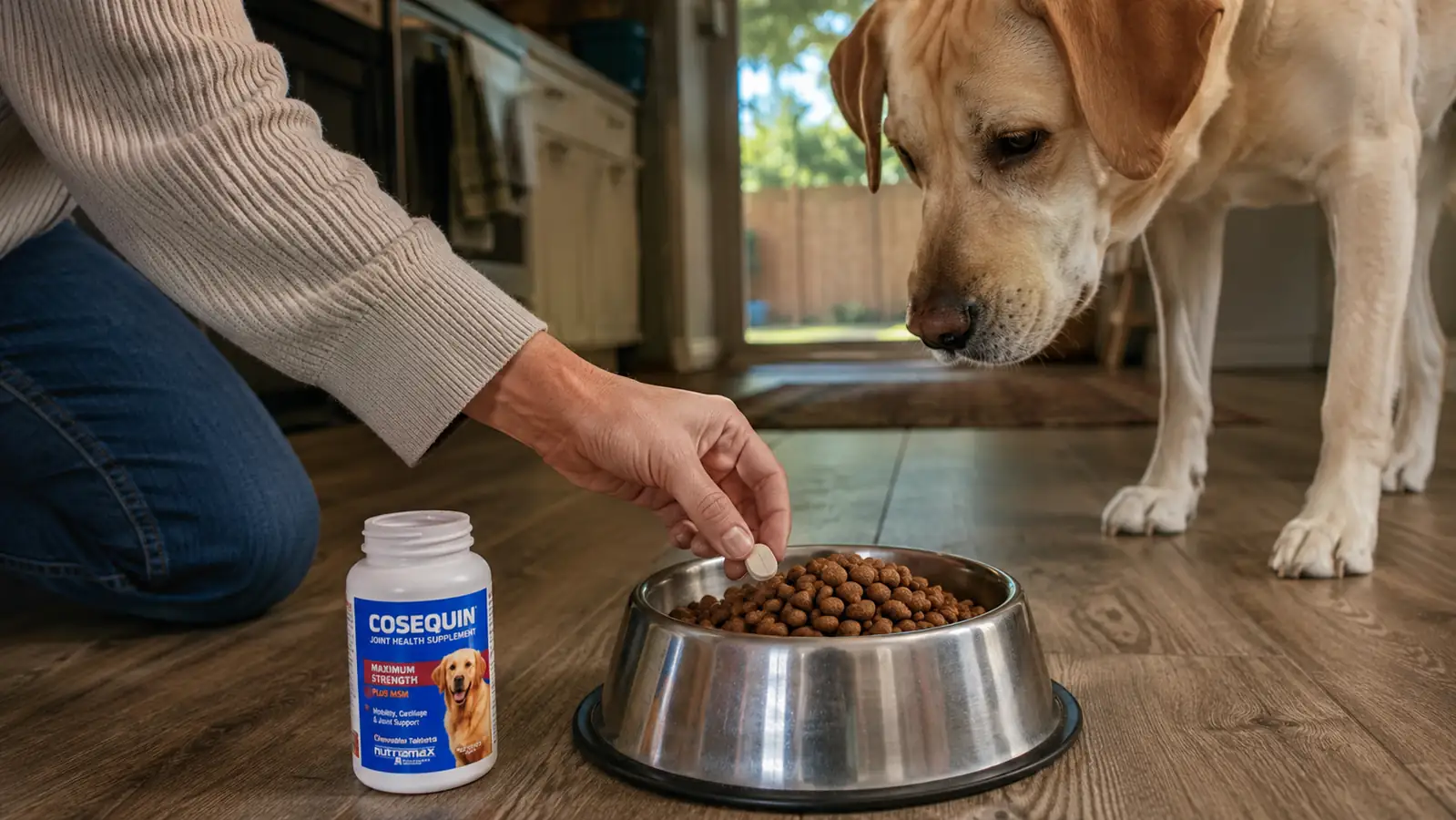
I'm not a vet, and I want to be upfront that this is one dog's experience, not a clinical trial. Maple is a 24-pound Beagle, and per the label and a quick confirmation from our vet, she gets two chewable tablets a day, split into one in the morning and one in the evening, both tucked into her regular kibble. I did this every day for six months, missing maybe four or five doses total when we were traveling and I forgot to pack the bottle in the rush of getting both dogs and a cat sitter organized.
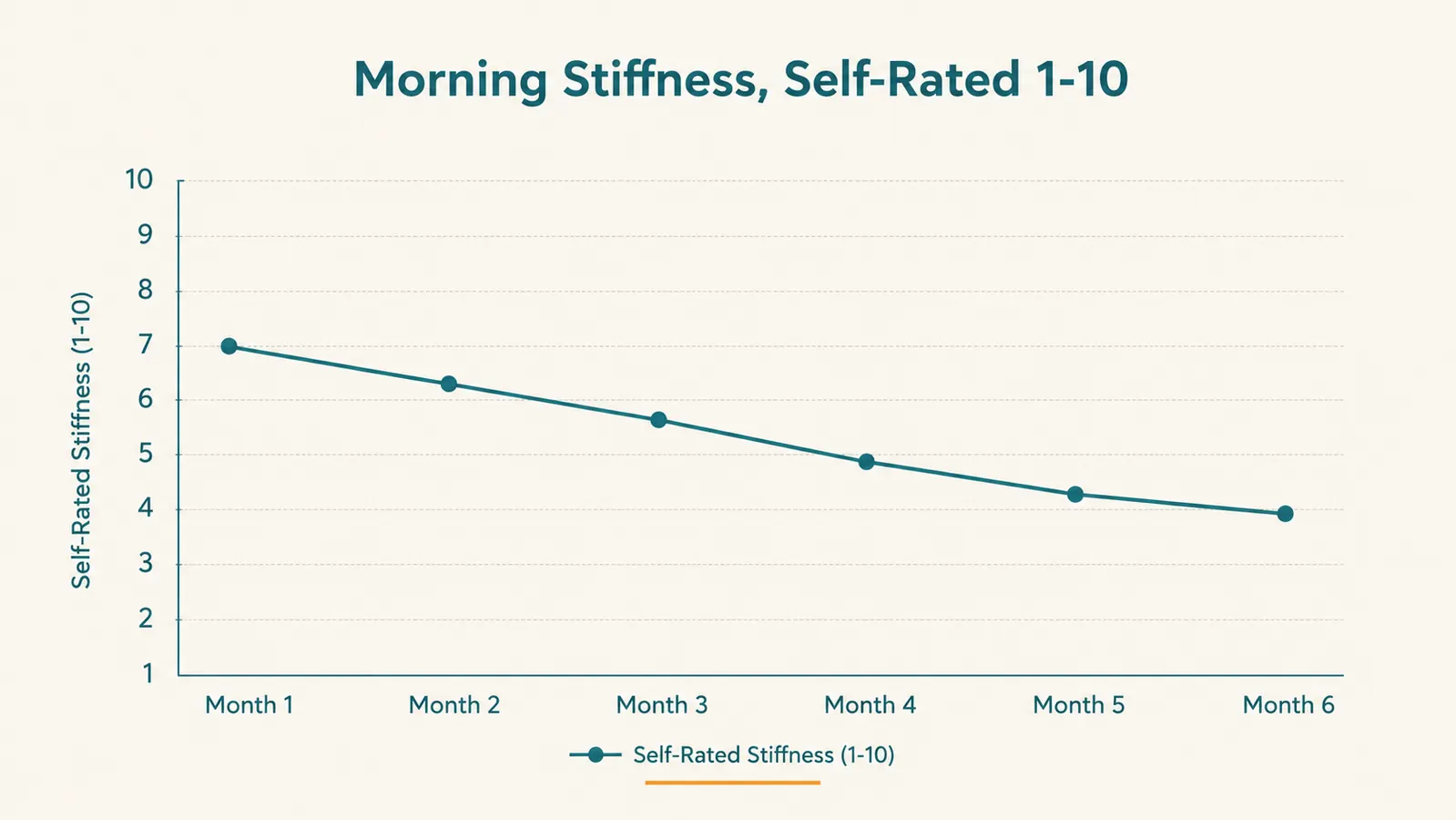
I didn't change her food, her exercise routine wasn't formally altered on paper, though I did start taking her on slightly longer evening walks once the weather cooled down, which I'll admit muddies the picture a little and I'll come back to that. She wasn't on any other joint medication during this window, and I kept a loose weekly note in my phone rating her morning stiffness on a 1-to-10 scale, mostly so I wasn't relying on memory alone six months later trying to reconstruct how bad things really were back in month one.
The tablets themselves are a chewable, pork-liver-flavored tablet, not a soft chew like some of the newer joint supplements on the market. Maple, who will eat literally anything including a sock once, had zero issue with them crushed into her food. My other dog Biscuit, a Lab mix who is not on this supplement and will inhale anything within reach, tried to steal one off the counter within the first week, which tells you something about the flavor appeal even if it's not exactly rigorous evidence.
What's Actually in It
Cosequin's core formula is glucosamine hydrochloride and chondroitin sulfate, with MSM included in this particular chewable tablet version. Glucosamine and chondroitin are the two ingredients you'll see across almost every joint supplement on the market, dog or human, because they're the building blocks most associated with cartilage structure and joint fluid. MSM is often added as a companion ingredient in these formulas, marketed as supporting comfort and mobility alongside the other two.
I want to be honest about the science here rather than oversell it: research on glucosamine and chondroitin supplementation in dogs is genuinely mixed, with some studies showing modest benefit and others showing little difference from placebo. No supplement is going to reverse joint damage or replace a vet's guidance on managing arthritis or hip dysplasia, and I'd be skeptical of anyone who tells you otherwise. What I can say is that Nutramax is a brand our vet trusts enough to keep in stock at the clinic, and the ingredient sourcing and manufacturing claims on the label were enough to make me comfortable feeding it daily for half a year without a second thought.
One thing I appreciated: the dosing is based on weight, and the label is specific about small, medium, and large dog amounts rather than a vague 'one tablet a day for everyone' instruction that a lot of cheaper supplements use. For a 24-pound dog like Maple, that meant getting her actual dose right instead of guessing or eyeballing a fraction of a tablet, which I've had to do with other products and never felt great about.
Before settling on Cosequin, I did look at a couple of alternatives. There's a cheaper store-brand glucosamine chew at our local pet supply place that runs a good bit less per bottle, and I actually tried it on Maple for about three weeks the year before. I didn't keep formal notes that time, but I don't remember noticing any change at all, and she seemed less interested in eating it, which meant I was hiding it in cheese more often than I'd like to admit. I also considered a liquid glucosamine you add to food, but with two dogs eating from bowls a few feet apart, I was worried about Biscuit lapping up more than his share. The tablet format, split by dog and dropped straight into each bowl, was just easier to control in a two-dog household.
What Changed Over Six Months
The honest answer is: slowly, and not in a straight line. For the first six to eight weeks, I genuinely didn't notice much of anything. My weekly stiffness notes hovered around a 6 or 7 out of 10 the whole time, and I remember texting my sister at week six saying I wasn't sure this was doing anything and that I was starting to feel like I'd wasted the money on another supplement fad.
Somewhere around month three, the mornings started looking different. Maple was getting up and moving toward the door within a minute or two instead of the slow, tentative shuffle I'd been watching for weeks. By month four and five, my notes were consistently landing around a 4, and by month six she was getting up and trotting to greet Biscuit at the fence line most mornings, which is not something I'd seen from her in close to a year. Even my husband, who is not the type to notice subtle changes in the dogs, commented on it unprompted one Saturday morning.
I want to flag the obvious confound again: I also started walking her more once the weather cooled off in month three, right around when I started noticing the change. Gentle regular movement is genuinely one of the better things you can do for a stiff senior dog, so I can't cleanly separate 'the supplement worked' from 'the extra walks worked' from 'both worked together.' What I can say is that the combination, whatever the actual mechanism, produced a real, visible difference in how she moves in the morning, and that's the outcome I actually cared about when I started this whole experiment.
Who This Seemed Best Suited For
Based on this experience, I'd point this toward dogs like Maple: older, mild-to-moderate stiffness, no diagnosed severe joint disease, and an owner who's willing to commit to a daily routine for at least two to three months before expecting to see anything. This isn't a same-week fix, and if you're hoping for one, you'll be disappointed and probably stop before it has a chance to do anything worth noticing.
It's also a good fit for owners who, like me, want something they can start on their own between vet visits for a dog that isn't showing severe symptoms yet, ideally with your vet looped in on the decision so nothing gets missed. Our vet was aware I was starting it and agreed it was a reasonable first step before considering prescription-strength options, which was reassuring since I didn't want to feel like I was self-diagnosing my own dog.
Tradeoffs and Things I'd Flag
The tablet size is on the larger end, and while Maple never had trouble with it crushed into food, a couple of reviews I read afterward mentioned pickier dogs refusing it whole. If your dog is a picky eater, crushing it into wet food or a small dab of peanut butter is probably a safer bet than expecting them to chew it like a treat on its own.
The other honest tradeoff is cost over time. This isn't a one-and-done purchase, it's a recurring line item if you plan to keep your dog on it, and a 132-count bottle covers roughly two months at a two-tablet daily dose for a dog Maple's size. I'd treat it as an ongoing part of the senior-dog budget rather than a single purchase, the same way I budget for flea prevention or her annual bloodwork.
I also didn't see any digestive upset, which I was watching for closely since Maple has a sensitive stomach and has reacted badly to ingredient changes before, including one memorable incident with a new brand of dental chews that I won't get into here. That was a genuine relief, but it's also anecdotal. Every dog's tolerance is different, and if your dog has a history of GI sensitivity, I'd start slow, maybe with a half dose the first few days, and watch closely the first week.
I'll also say the six-month mark is roughly where I'd want to reassess before committing further, rather than assuming the trend line just keeps improving forever. Maple's stiffness plateaued a bit in month five and six rather than continuing to drop, which tracks with what I've read about these supplements generally: they seem to help more with maintaining a baseline than with continuing to improve indefinitely. I don't think that's a knock against the product so much as a realistic expectation to set going in, and it's changed how I talk about it with other dog owners who ask.
What I Liked
- Easy daily routine, no fuss mixing it into regular food
- Weight-based dosing instructions are specific, not vague
- No digestive upset over six months, even with a sensitive-stomach dog
- Visible, gradual improvement in morning stiffness by month three
- Brand our vet already trusts and keeps in stock
Where It Falls Short
- Takes 6-plus weeks before you notice anything, if you notice anything at all
- Hard to isolate from other changes like increased exercise
- Ongoing cost since it's a ~2-month supply per bottle at full dose
- Tablet size may be tough for very picky or very small dogs
- Not a substitute for a vet diagnosis if stiffness is sudden or severe
By month six, Maple was trotting to the fence line most mornings, something I hadn't seen from her in close to a year.

Who This Is For
I'd recommend this to owners of senior or middle-aged dogs showing early, mild stiffness, especially first-thing-in-the-morning stiffness that loosens up with movement over the course of the day. It's also a reasonable choice if your vet has suggested trying a joint supplement before considering anything stronger, or if you simply want to be proactive with a large-breed or aging dog before problems show up in a more obvious way. Patience is the real requirement here more than anything else, and if you go in expecting a quick fix you're setting yourself up to be disappointed.
Who Should Skip It
If your dog has sudden lameness, is crying out in pain, or has a diagnosed condition like severe hip dysplasia or advanced arthritis, this is not a substitute for an actual vet visit and a real treatment plan, and I'd never suggest waiting on a supplement in that situation. I'd also skip it, at least as a first move, if you're not able to commit to at least two to three months of consistent daily dosing, because that seems to be roughly where any real change starts to show up based on what I saw with Maple. Inconsistent dosing seems like the fastest way to convince yourself something doesn't work when the real issue is that it was never given a fair shot.
Six months in, this is still part of Maple's morning routine
If your dog is showing the same early morning stiffness Maple did, it might be worth a look. Check today's price on Amazon and see current availability.
Amazon Check Today's Price on Amazon →