
Short answer, since I know most people scanning this are trying to decide fast: for everyday stress, thunderstorms, car rides, the groomer, fireworks on the Fourth, being left home alone for the afternoon, I reach for calming chews. They're simple, they're cheap enough to try without agonizing over it, and I know exactly what's in the bag. CBD oil is a different animal. I get asked about it constantly, and I'm not going to pretend I have a confident answer, because honestly nobody selling it does either, not in the way the label sometimes makes it sound. This article is me walking through both, plainly, without pretending either one is magic.
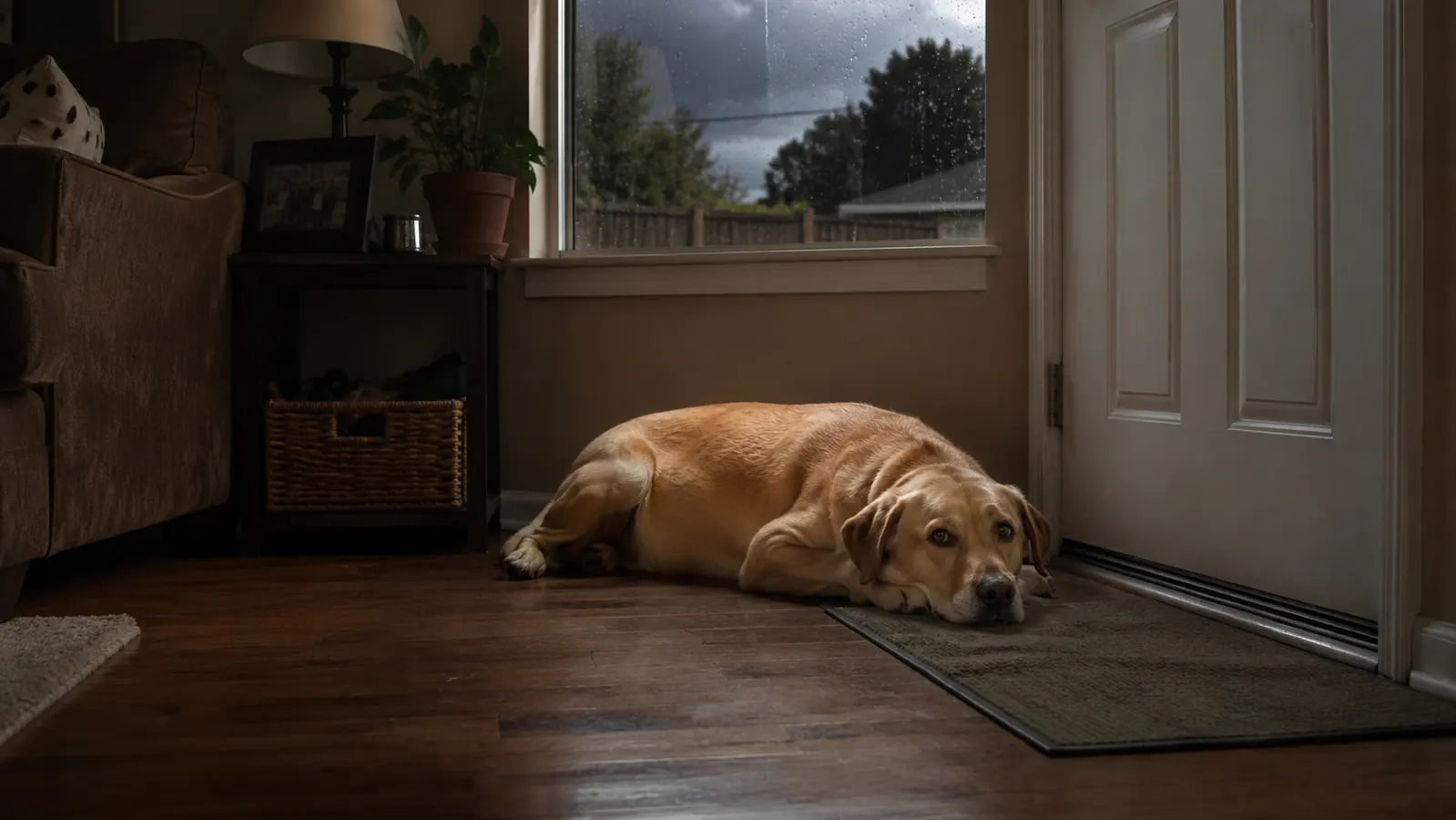
My dog Biscuit is a food-motivated Lab mix who is otherwise pretty easygoing, except during thunderstorms, when he paces, pants, and tries to wedge himself behind the toilet in our small bathroom like that's somehow a safe bunker. My other dog, Maple, a senior Beagle who's stiff in the mornings, doesn't get panicked exactly, but she gets uneasy at the vet and shakes a little in the car on longer drives. Neither one has what I'd call a real anxiety disorder, and I want to be upfront that this comparison is written for dogs like mine, garden-variety situational stress, not dogs dealing with true separation anxiety, noise phobia bad enough to hurt themselves, or panic attacks. If that's your dog, please read to the end, because I address that specifically and it changes the advice.
| Calming Chews | CBD Oil for Dogs | |
|---|---|---|
| What's Actually In It | A defined recipe on the label, typically things like melatonin, L-theanine, chamomile, and thiamine, with a milligram amount printed for each | Hemp extract with a stated CBD milligram count, but potency and purity vary a lot brand to brand, and independent lab testing is inconsistent across the market |
| Regulatory Oversight | Sold and regulated as a pet supplement, similar to other over-the-counter chews | Still a legal and regulatory gray area for pets in a lot of states, with no standardized federal approval process for CBD pet products |
| Ease of Giving | Soft chew a dog usually takes like a treat, no measuring involved, my Biscuit eats his like it's a snack | Dropper bottle, has to be measured by drops or milliliters and either given directly or mixed into food, more fumbling if your dog wiggles |
| Dosing Clarity | Dosing is printed right on the bag by dog weight, easy to follow without guesswork | Dosing guidance varies widely by brand and is often vague, which makes it genuinely hard to know if you're giving too little or too much |
| What It's Marketed For | General situational stress, thunderstorms, travel, vet visits, being left alone for a few hours | Often marketed more broadly, sometimes implying it helps with pain or serious anxiety, claims that aren't backed by the kind of solid veterinary research I'd want before trusting them |
| Estimated Cost Per Month (average dog) | Generally the more affordable option for daily or as-needed use | Often costs more per month, especially with a higher-quality, third-party-tested product |
| Is It a Sedative | No, it's meant to take the edge off, not knock a dog out, and it won't work on genuine panic | Not intended as a sedative either, though some dogs report feeling drowsy, effects and consistency vary widely between products and even between batches of the same product |
| How Comfortable I Am Recommending It Blind | Comfortable recommending it as a low-risk first thing to try for mild, everyday stress | Not comfortable recommending a specific product, this is a talk-to-your-vet-first category for me |
Where Calming Chews Win
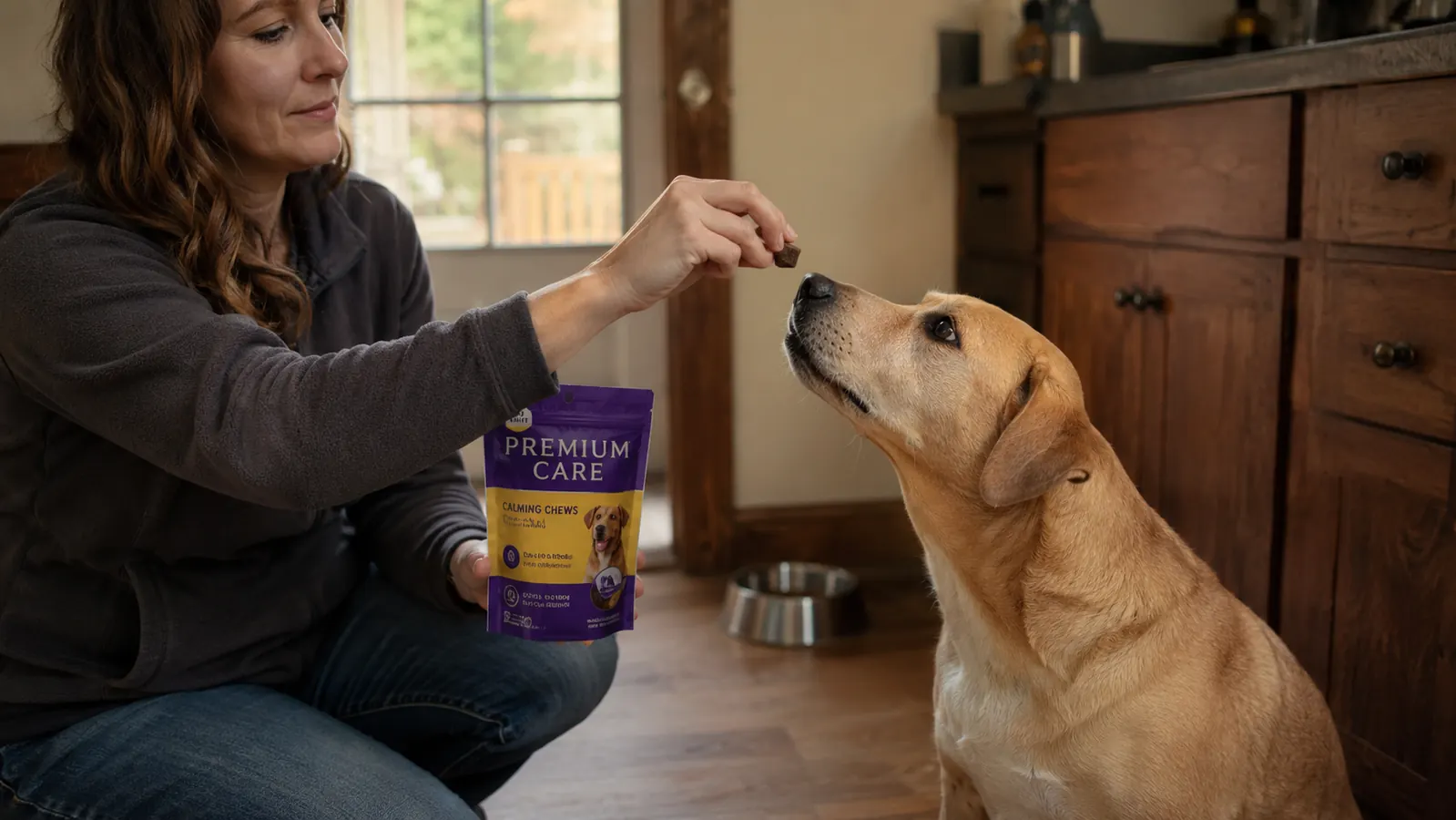
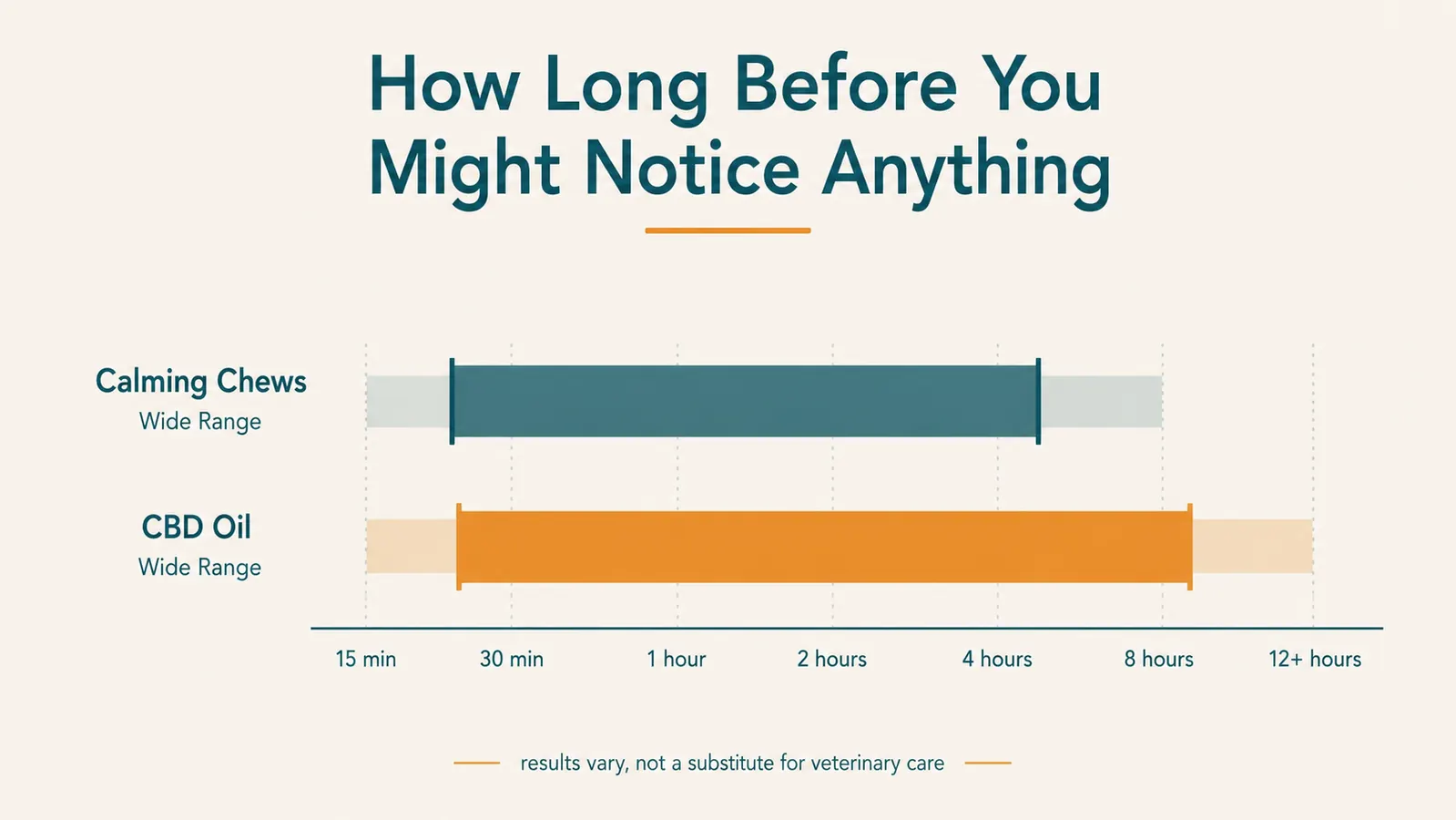
The biggest thing calming chews have going for them is that I know what I'm giving my dog. The bag I keep in the pantry lists melatonin, L-theanine, chamomile, and a couple of B vitamins, each with a milligram amount, and the dosing is right there by weight. There's no measuring, no dropper, no guessing whether I'm under or over dosing. Biscuit takes his about thirty minutes before a storm rolls in, and while I wouldn't say he turns into a completely different dog, he's noticeably less frantic about finding a hiding spot, and he settles faster once the thunder actually starts. That's genuinely all I'm asking a supplement to do. I'm not expecting a miracle, and I want to be honest that this product sits at around a 4.0 star average, which tells you something important: it works well for a lot of dogs and does close to nothing for others. That's just how these things go with any calming supplement, dogs are individuals and their brain chemistry doesn't read the label.
The other real advantage is how low-stakes trying it is. If a calming chew doesn't do much for your dog, you're out the cost of a bag, not a bigger financial or safety risk. I'd also point out this isn't a sedative and I don't treat it like one. On the couple of occasions Biscuit has gotten genuinely, visibly panicked, not just pacey but truly frantic, scratching at doors, drooling, trying to bolt, a calming chew has not been enough, and I don't pretend it should be. For that level of distress, I've called our vet, and that's the honest line I'd draw for any reader here too. A chew is for taking the edge off ordinary stress, not for managing a crisis.
The ingredient list is also why I don't treat every calming chew as interchangeable. Melatonin is the piece that seems to matter most for situational stress like storms and travel, since it's tied to your dog's natural sleep-wake rhythm rather than acting like a sedating drug. L-theanine and chamomile are the calmer, gentler additions that a lot of human relaxation products use too, and thiamine, which is a B vitamin, shows up because a deficiency in it has been loosely associated with nervous behavior in dogs, though that's a minor piece of the formula, not the headline ingredient. None of that adds up to anything dramatic, and I wrote a longer breakdown of exactly how this played out for us over several months if you want the full day-by-day version, including the couple of times it didn't do much at all. I mention that because I think honest reviews matter more than glowing ones, and a 4.0 star average product deserves both sides told plainly.
Where CBD Oil Interests People
I understand why CBD oil comes up so often. There's a lot of interest around it right now, and some owners feel like they've seen a real difference in their own dogs. I'm not going to tell you that's impossible, but I also can't responsibly tell you it works, because the research in dogs is still limited, and I'm not a veterinarian qualified to interpret it for your specific dog anyway. What I can tell you plainly is that this is a genuinely murky category. Product quality varies enormously from one brand to the next, some products are tested by an independent lab and some aren't, the actual CBD content on the label doesn't always match what's in the bottle, and the legal status of CBD for pets is still unsettled in a lot of places. In some states, veterinarians are limited by their own licensing boards in what they're even allowed to say to you about CBD, which tells you how unresolved this whole area still is.
Because of all that, I'm not going to recommend a specific CBD product here, and I'm not going to tell you it treats anxiety, pain, or anything else. That's not me being cagey, it's me being honest about where the evidence actually stands and staying in my lane as a pet owner writing about what I use, not a source of medical guidance. If you're genuinely curious about CBD for your dog, the right first move is a conversation with your own vet, who knows your dog's health history, current medications, and can tell you whether it's worth exploring where you live and where they practice. This article is not veterinary advice, and neither is anything you read on a product label promising more than that.
If your vet does give you the green light to try CBD, the practical advice I'd pass along, again, not as medical guidance, just as things worth asking about, is to look for a product with a Certificate of Analysis from an independent lab, confirming what's actually in the bottle matches the label, and to start at the lowest suggested amount rather than the highest. Watch your dog closely for any change in appetite, energy, or stool, and keep your vet in the loop rather than adjusting the dose on your own based on what worked for someone else's dog on a forum. I'd also gently push back on any CBD product that markets itself with strong, specific promises, curing anxiety, stopping seizures, eliminating pain, because that kind of language is a red flag for overselling a product the science doesn't fully support yet, not a sign it's more effective.
For everyday stress like storms, car rides, and the groomer, start with the option that's simple to dose
Calming chews are the low-risk, easy-to-measure option I actually keep in my pantry for Biscuit. Check today's price and see the current chew options on Amazon.
Amazon Check Today's Price on Amazon →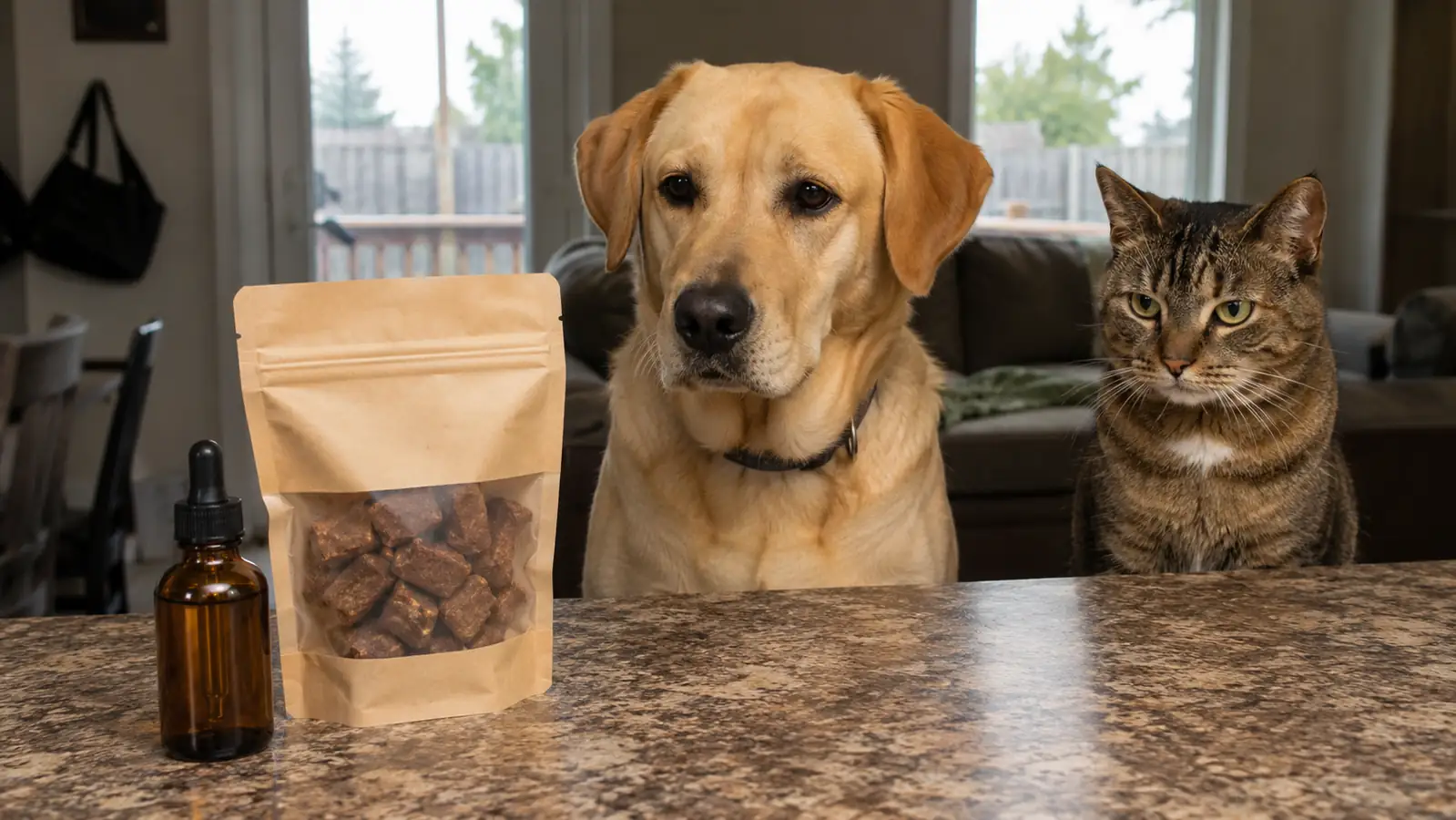
Who Should Buy Which
If your dog's stress looks like Biscuit's or Maple's, gets a little wound up during storms, doesn't love the car, tenses up at the vet, or gets restless when you leave for the afternoon, a calming chew is a reasonable, inexpensive first thing to try. Give it a few uses before deciding it's not working, since some dogs respond better after a couple of tries than the very first time, and watch for the obvious signs it's helping, faster settling, less pacing, less panting. If a few tries doesn't move the needle at all, that's useful information too, and it just means your dog is one of the ones a supplement like this doesn't do much for.
If you're specifically drawn to CBD oil because you've heard it might help, my honest suggestion is to bring it up with your own vet before buying anything, rather than picking a bottle off a shelf or a listing online based on marketing copy. Ask them directly whether it's something worth exploring for your dog, what they'd want you watching for, and whether it interacts with anything your dog currently takes. Regulation and quality in this category vary enough that a recommendation from someone who actually knows your dog is worth a lot more than anything I could tell you in a comparison article.
And if what you're actually describing isn't mild stress but something closer to real panic, destructive behavior when you leave the house, shaking that doesn't stop, hiding for hours, self-injury during storms or fireworks, please don't try to solve that with a chew or an oil bought online. That's separation anxiety or a noise phobia territory, and it usually needs an actual veterinary behavior plan, sometimes including prescription medication, not an over-the-counter product. I say this as someone who tried a calming chew on Biscuit's worst storm night hoping it would be enough, and it wasn't, and that was the moment I understood the difference between everyday jitters and something that needs a vet's help. Neither calming chews nor CBD oil is built to replace that level of care, and no honest product label should suggest otherwise.
On plain dollars and cents, calming chews tend to be the cheaper habit to keep up, whether you're using them daily during a stressful season or just a few times a month around predictable triggers like storms or the Fourth of July. CBD oil, especially a quality product with real lab testing behind it, usually runs higher per month, and you're paying for a level of manufacturing oversight that plain chews don't need in the same way. Neither cost is worth spending if the product doesn't actually help your specific dog, which is why I'd always start with the cheaper, easier-to-judge option before working up to anything that requires a bigger financial or medical commitment.
Ready to try the simple, easy-to-dose option first
I've used these chews for Biscuit's storm anxiety and Maple's vet-day jitters for a while now, and I've written up the full long-term breakdown separately. If you want to start where I did, check the current price and chew options on Amazon.
Amazon Check Today's Price on Amazon →