
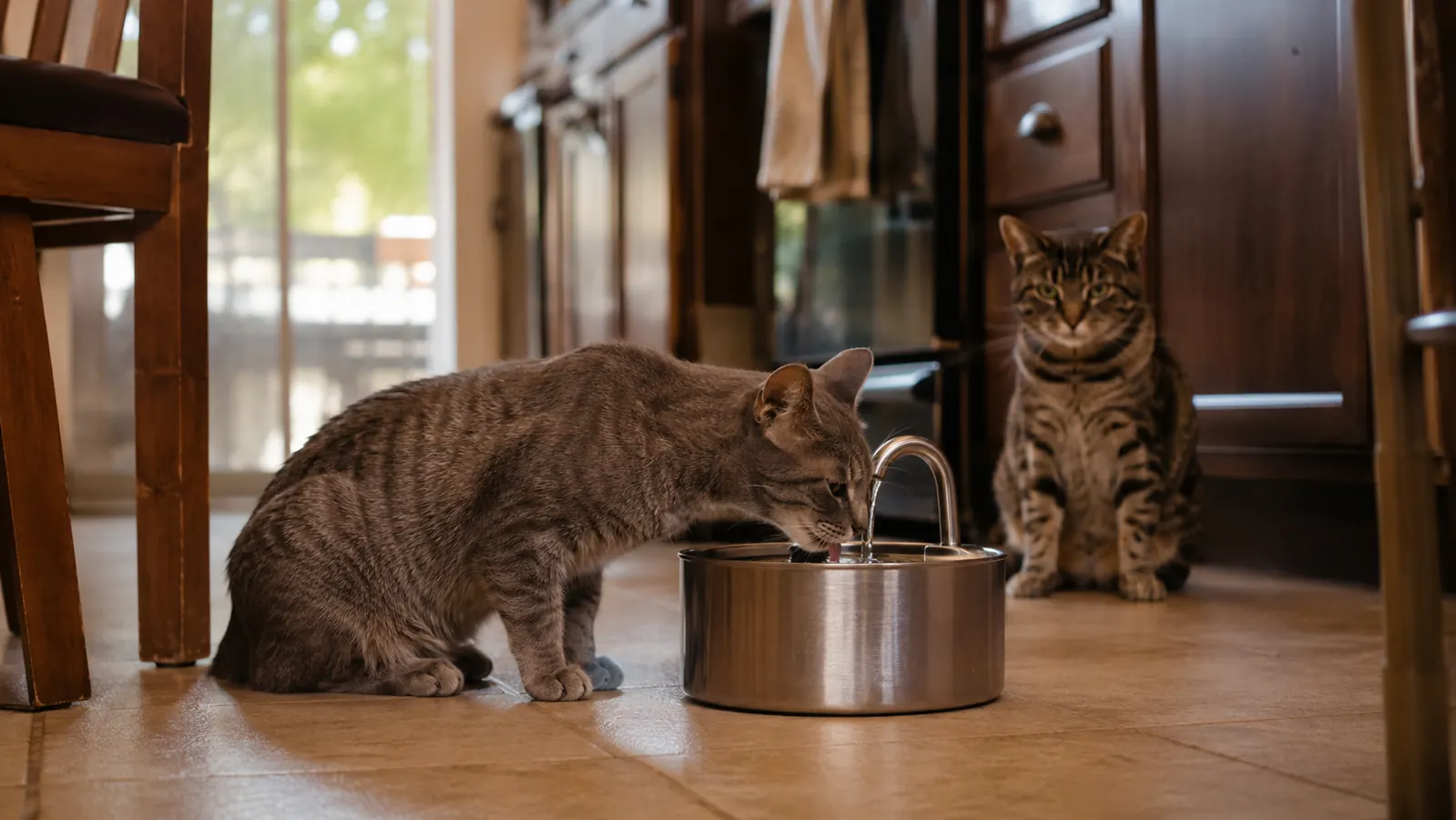
Our cat Pepper has never been what I'd call an enthusiastic water drinker. For years I'd catch her walking straight past a full bowl to go drink out of the bathroom faucet drip, or worse, sniff at her water and just walk away. I used to shrug it off as cat weirdness, which to be fair, a lot of cat behavior is. But when our vet mentioned at a checkup that low water intake is one of the more common, quietly serious issues in cats, especially as they get older, I started paying closer attention to what was actually going on with her bowl. A Veken pet fountain ended up being the change that moved the needle most, and I'll get to exactly where it fits.
Cats are descended from desert animals, and a lot of their wild ancestors got most of their moisture from prey rather than standing water, so a lot of them just aren't wired to seek out a bowl the way a dog will. That doesn't mean you're stuck watching your cat under-drink forever. Over the last year I've made five specific changes around our house that got Pepper actually interested in water again, and I'm walking through all of them below in the order I'd try them if I were starting over. The single biggest one was swapping her bowl for a Veken pet fountain, but the other four cost nothing and I'd do them even without the Veken sitting on the floor.
Water intake matters more for cats than most people realize, partly because so many cats eat mostly dry kibble, which has almost no moisture in it compared to the wet food or fresh prey their bodies evolved to run on. That gap has to get made up somewhere, and for a lot of cats it just doesn't, which quietly stresses the kidneys and bladder over years of underdrinking. None of that means you need to panic over one skipped bowl. It just means the small habits below are worth taking seriously rather than shrugging off as cat quirks.
The one change that made the biggest difference for our tabby
Pepper ignored still water in a bowl for years. What finally got her drinking regularly was switching to a running fountain, the Veken pet fountain, which keeps water circulating and filtered instead of sitting flat and stagnant.
Amazon Check Today's Price on Amazon →Step 1: Switch to a Fountain Instead of a Still Bowl
This was the single biggest change we made, and it's the one I'd tell any cat owner to try first. Cats are drawn to moving water for the same reason they're drawn to a dripping faucet: instinct tells them moving water is fresher and safer than water that's been sitting still, which in the wild often meant stagnant or contaminated. A bowl that just sits there doesn't trigger that same interest, even if the water in it is perfectly clean.
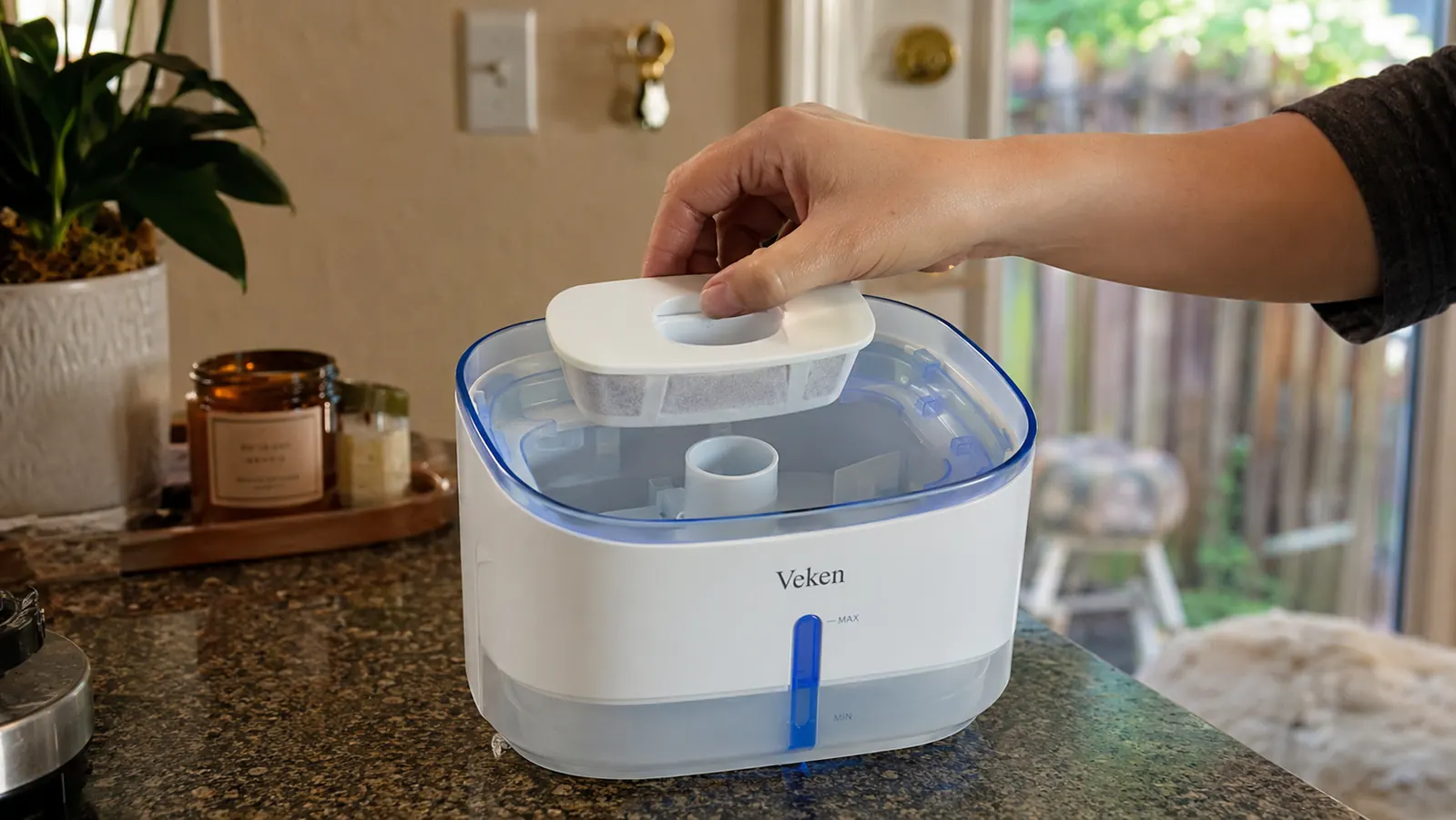
We landed on the Veken pet fountain after I got tired of buying and replacing basic plastic fountains that either got loud after a few weeks or grew that filmy buildup no matter how often I scrubbed them. This one holds close to three liters, which means I'm not refilling it every single day the way I was with a smaller bowl, and it uses replacement carbon filters that pull out a lot of the loose hair and debris before it ever reaches Pepper's mouth.
It took Pepper about three days to fully trust it. The first day she just stared at it running from across the kitchen. By day two she was dipping a paw in, which is a very cat thing to do before actually drinking. By the end of the week she'd pick the fountain over her old bowl every time, even when I left both out side by side. If your cat is a still-water skeptic like mine was, give a fountain at least a week before deciding it's not for them.
Placement matters for the fountain too, not just the bowl underneath it. We keep ours away from the wall so the motor hum doesn't echo, and on a low mat so splashes don't turn into a slip hazard on our kitchen tile. If your cat is especially sound-sensitive, look for a model with a quieter pump, since a fountain that startles a nervous cat every time it cycles on will do the opposite of what you're going for.
Step 2: Move the Water Bowl Away From Food and the Litter Box
This one costs nothing and I wish I'd known it years ago. In the wild, cats generally don't eat and drink in the same spot, because a food source that attracts other animals is also a risk near their water. Some cats carry that instinct straight into a modern kitchen, which means a bowl placed right next to the food dish can quietly go untouched even though it's sitting a foot away.
We had Pepper's water bowl pushed right up against her food bowl for the longest time because it looked tidy on our little kitchen mat. Once I read that this pairing can actually discourage drinking in some cats, I moved her water a few feet away, onto the counter-adjacent floor space near the pantry instead. It's a small rearrangement, but I noticed her checking it more within days.
The litter box matters even more here. Water anywhere near a litter box, even a clean one, is going to get skipped by most cats for the same hygiene instinct. If your cat's water station shares a room with the litter box, that's worth fixing before you try anything fancier like a fountain.
Step 3: Use a Wide, Shallow Bowl to Avoid Whisker Fatigue
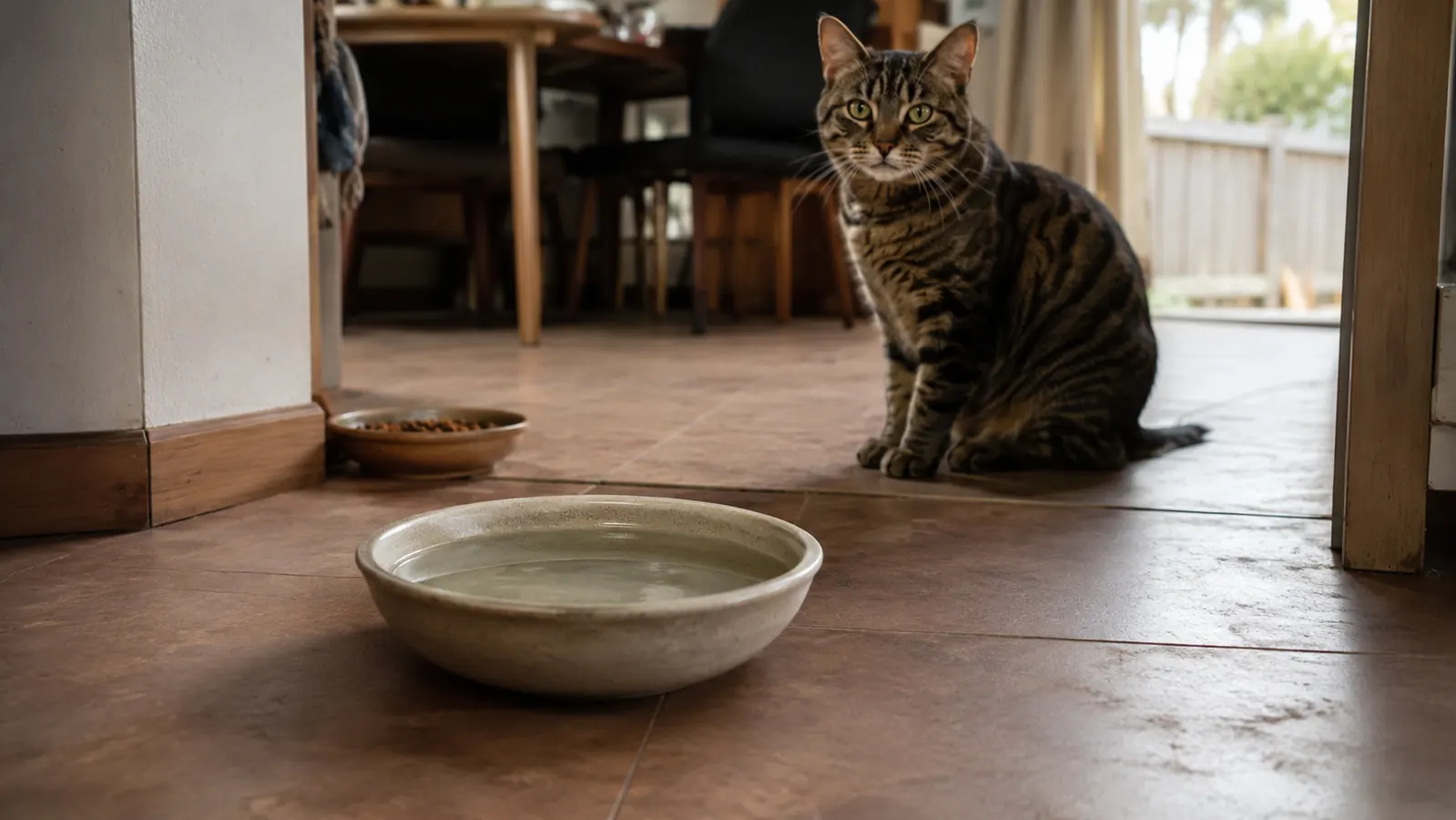
I hadn't heard the term whisker fatigue until a few years ago, but once I understood it, a lot of Pepper's pickiness made more sense. A cat's whiskers are packed with nerve endings, and a deep, narrow bowl forces those whiskers to press against the sides every time she dips her face in to drink. For some cats that's mildly annoying. For others it's uncomfortable enough that they'd rather skip the bowl entirely or only take a few quick sips instead of a real drink.
We swapped Pepper's old narrow ceramic bowl for a wider, shallower one that lets her drink without her whiskers ever touching the sides. It was one of the cheapest changes on this whole list, just a different shaped dish, and it made an immediate difference in how long she'd stay at the bowl. The same logic applies to the basin on a fountain. If yours came with a deep, narrow reservoir, look for one with a wide, open drinking area instead.
Step 4: Set Up More Than One Water Station
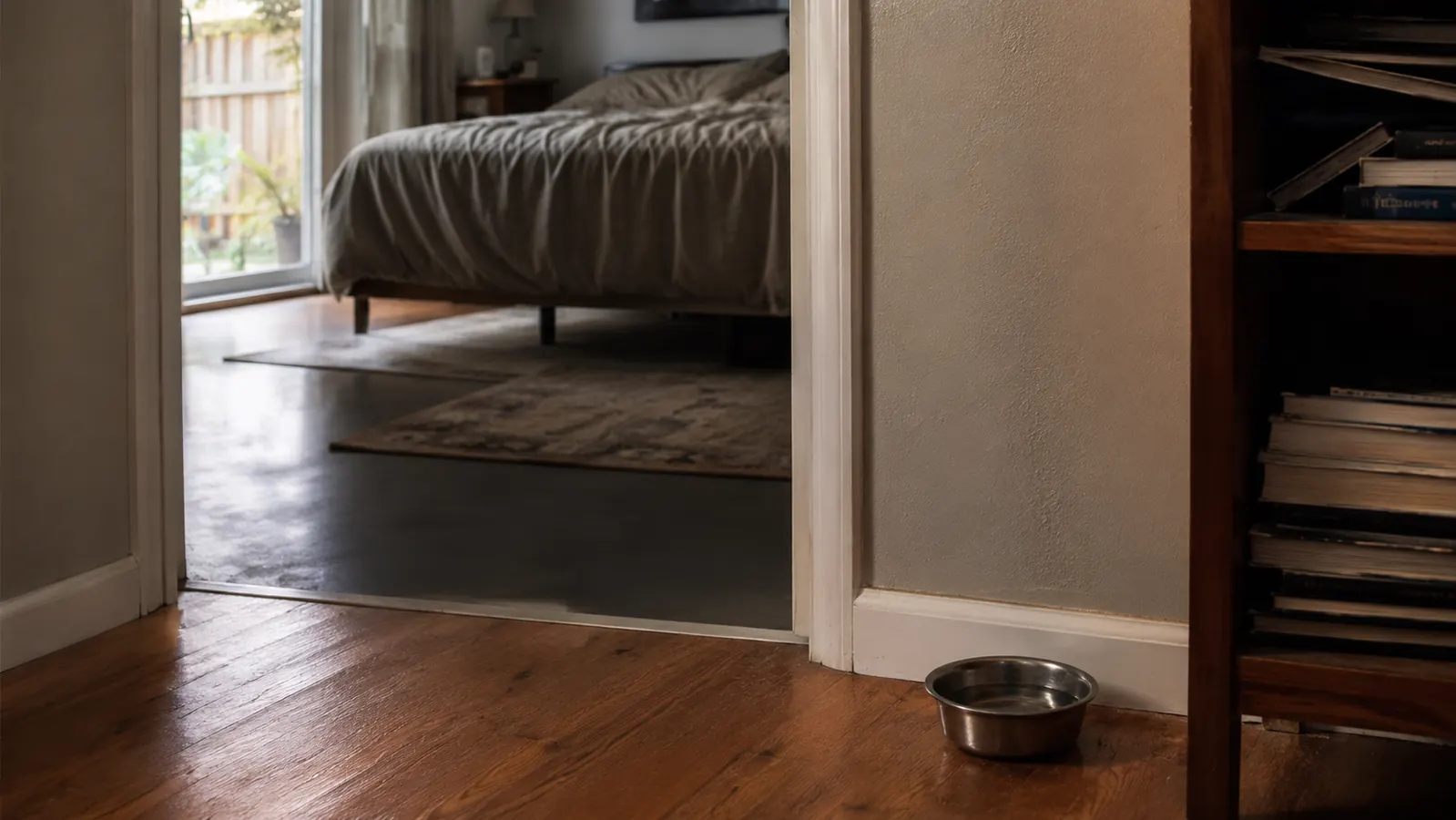
Cats don't always want to walk across the house every time they're a little thirsty, especially older cats or ones with any joint stiffness. We only had one water source for years, the kitchen, and looking back I think that alone was limiting how much Pepper drank on an average day. She's not going to make a special trip from the couch to the kitchen for a quick sip the way she'd top off a bowl that was already nearby.
We now keep a second, smaller bowl near the hallway close to where she naps most afternoons, and a third small dish upstairs. None of them are elaborate, just simple bowls I already owned. The rule of thumb I've seen recommended is one water station per cat plus one extra, spread around different areas of the house rather than clustered in one room. For a one-cat household in a small house like ours, two or three stations has been plenty.
This matters even more in a multi-pet home. Our dogs Biscuit and Maple share the same general floor plan as Pepper, and she's made it clear over the years that she does not love drinking from a bowl either of them has been sniffing around. Giving her a water source that's clearly hers, off in a quieter corner, removed that competition entirely.
It also helps to actually notice how much water is disappearing day to day, even roughly. I don't measure to the ounce, but I've gotten into the habit of glancing at the fountain's water line each morning when I top off coffee, just to get a feel for what normal looks like for Pepper. That baseline is what made it obvious a few months back when she suddenly seemed to be drinking more than usual during a stretch of warmer weather, which turned out to be nothing, but it's the kind of thing you can only catch if you already know what typical looks like.
Step 5: Add a Little Water to Wet Food and Keep Everything Fresh
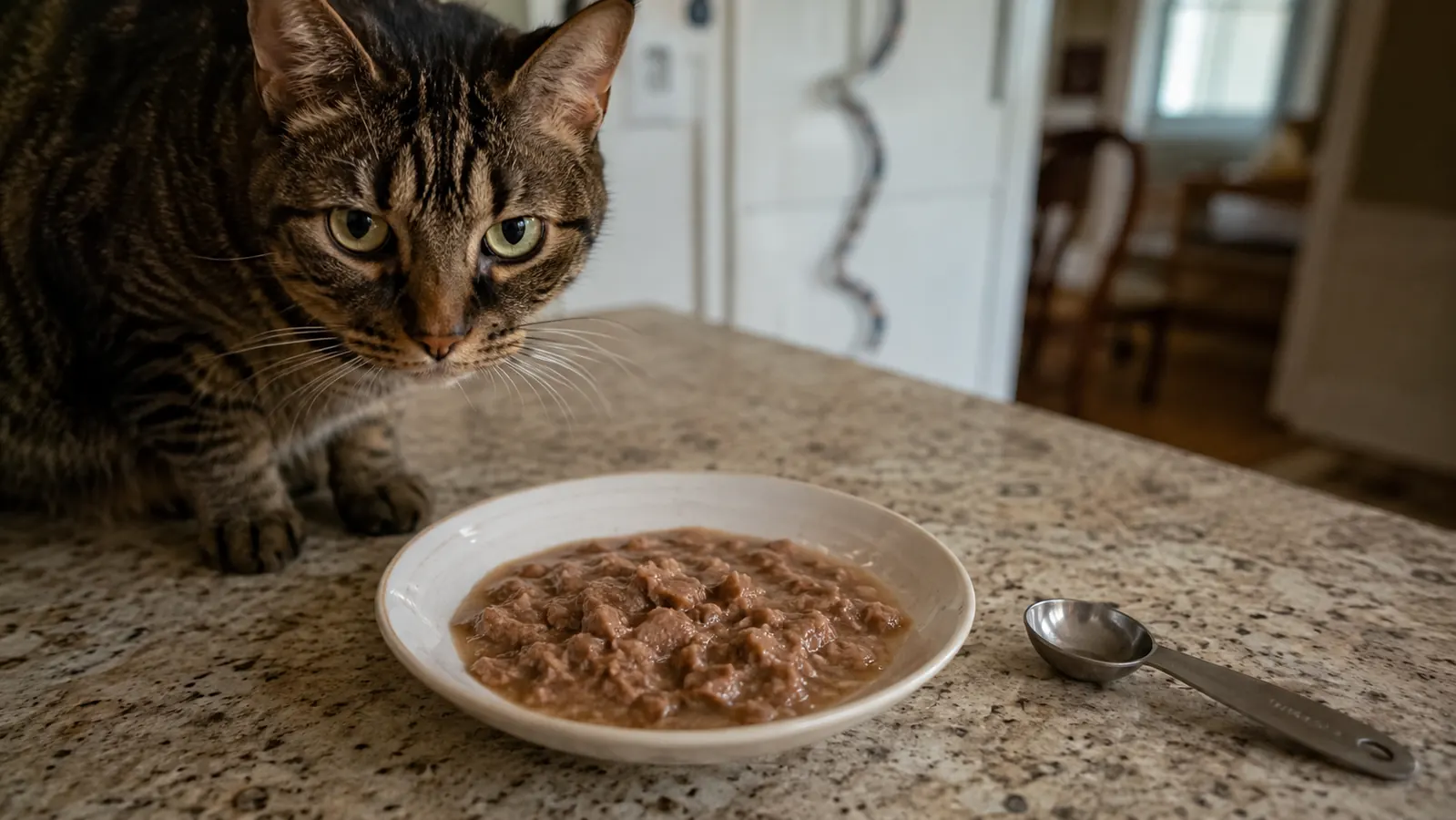
Wet food is already doing a lot of the hydration work for you, since it's roughly 70 to 80 percent water compared to the 10 percent or so in most dry kibble. On the nights we give Pepper wet food, I'll stir in a small splash of water to loosen it up slightly. She doesn't seem to notice the difference in taste, and it adds a bit more moisture to a meal that's already helping her stay hydrated.
None of the steps above matter much if the water itself isn't appealing, though. I rinse and refill every bowl daily, and I run the fountain's filter change on the schedule the packaging recommends rather than waiting until it looks dirty. Cats notice stale water faster than we give them credit for, and a bowl that's been sitting since yesterday morning, even if it looks fine to us, is often part of why a cat starts avoiding it in the first place.
I also wash the fountain's pump and reservoir with warm soapy water about once a week, which keeps that slimy biofilm from building up around the edges. It takes maybe five minutes and it's made a bigger difference in how reliably Pepper uses it than almost anything else on this list.
What Else Helps
A few smaller things that aren't strictly necessary but have helped around the edges: dropping an ice cube or two into the fountain on hot days seems to get Pepper's attention, and a tiny splash of the water drained from a can of tuna, not the oil, stirred into her regular water once in a while gets her interested in a bowl she might otherwise ignore. I don't do that often since it's more of a treat than a habit, but it's a useful trick if you're trying to coax a stubborn drinker toward a fresh bowl for the first time.
If you're on well water or notice mineral buildup fast, a filtered fountain earns its keep even more, since hard water can leave a chalky residue that some cats seem to actively avoid. We deep clean ours with a bottle brush and a bit of white vinegar every couple of weeks on top of the weekly soap rinse, which keeps the flow smooth and the taste consistent enough that Pepper never has a reason to go looking for a dirty faucet drip instead.
I'd also say don't underestimate simply watching where your cat naturally spends time. Pepper does most of her lounging on a windowsill on the far side of the living room, and once I put a small bowl within a few steps of that spot, she started drinking there almost every afternoon without me doing anything else differently.
One more thing worth saying plainly: I'm a pet owner sharing what's worked in our house, not a vet, and this guide is meant to encourage more everyday water intake, not to diagnose or treat anything. If your cat suddenly starts drinking a lot more or a lot less than usual, that's not something to try to fix with bowls and fountains. A sudden change in thirst can be an early sign of something like kidney disease or diabetes, and it's worth a vet visit right away rather than waiting to see if it resolves on its own.
The day I caught Pepper choosing the fountain over the bathroom sink drip, I knew we'd finally found something that actually worked for her.
None of these five steps are complicated or expensive on their own, but stacked together they made a real difference for a cat who used to treat her water bowl like an afterthought. Start with the fountain and the bowl placement, since those two changes had the biggest impact for us, then layer in the rest as you go.
Want to try the fountain that changed our tabby's habits?
If your cat walks past her water bowl the way Pepper used to, a running fountain is worth trying first. The Veken pet fountain is the one we've used daily for over a year, filters included.
Amazon Check Today's Price on Amazon →