
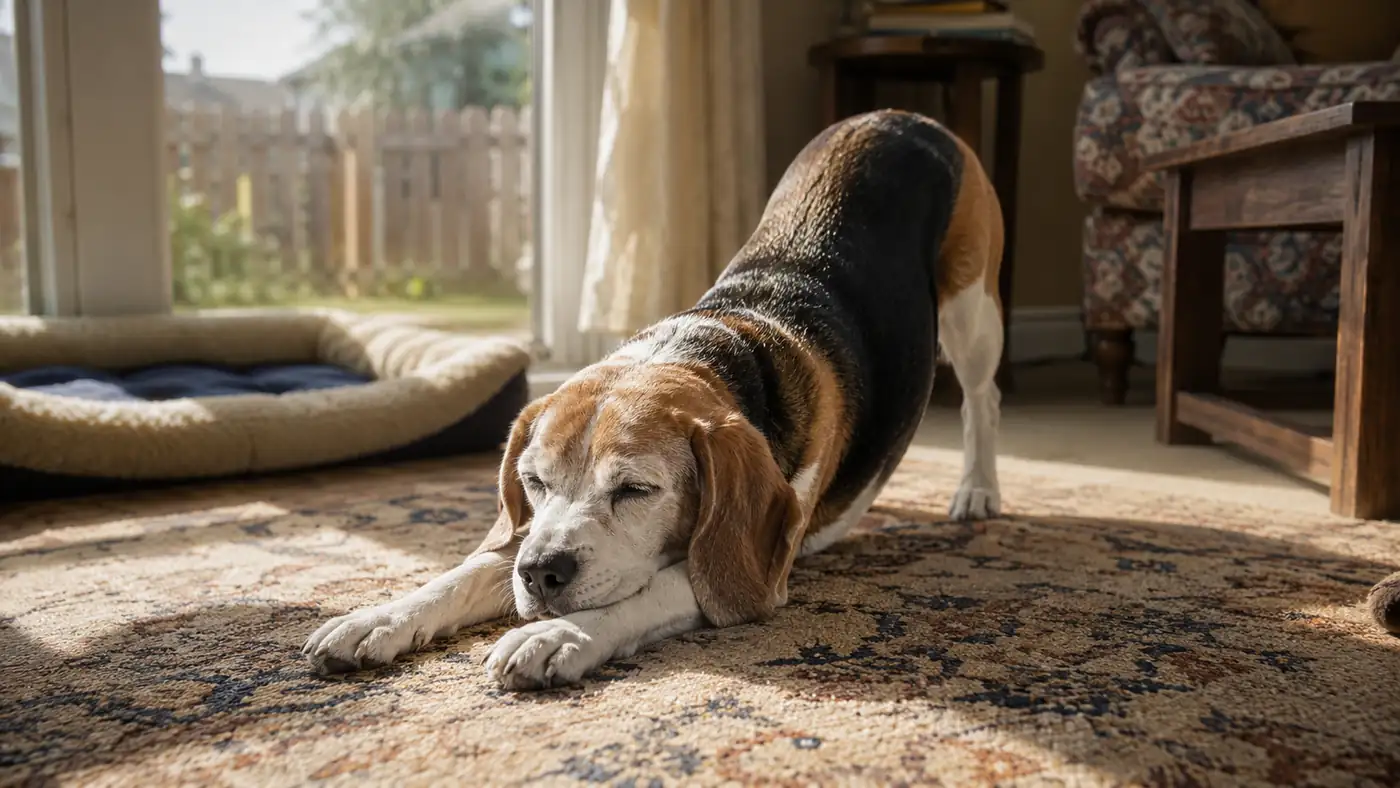
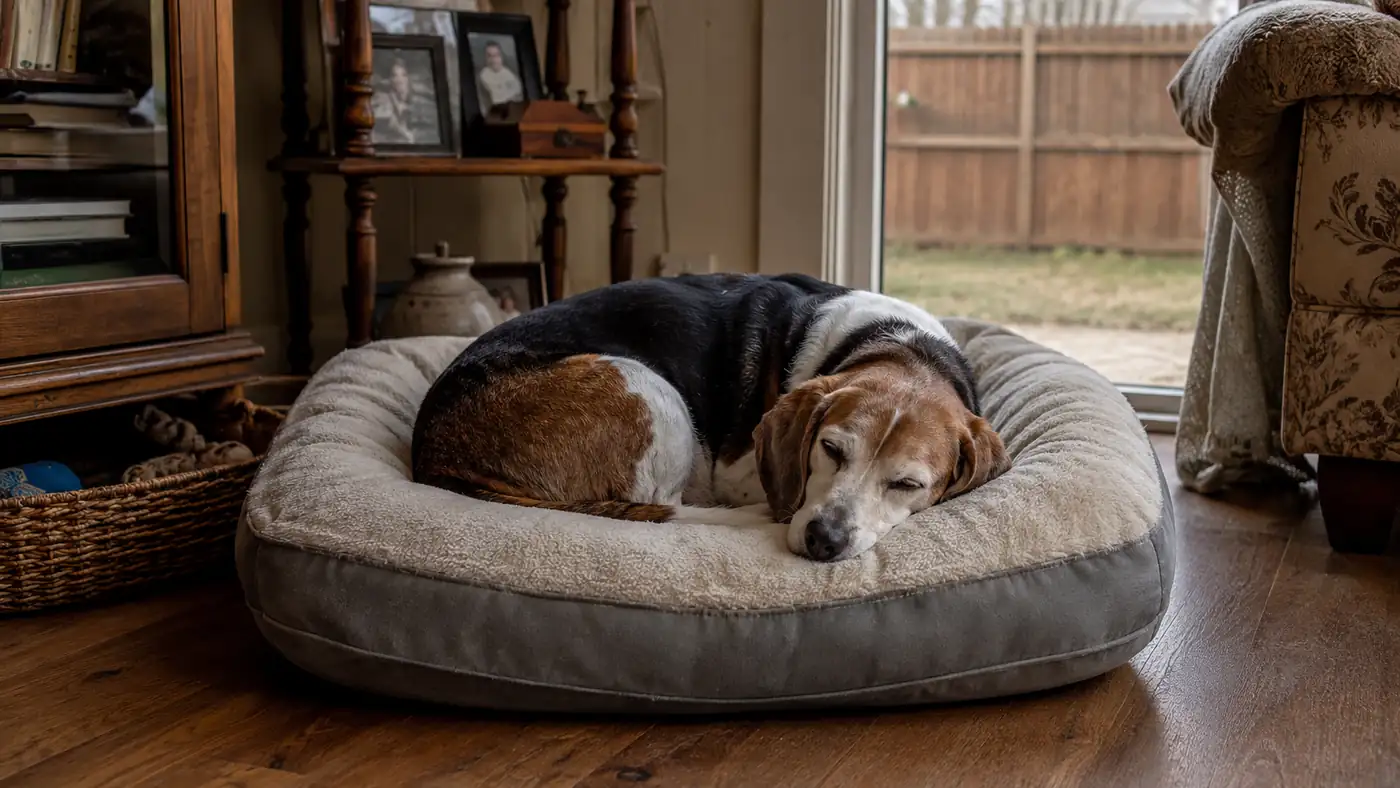
My Beagle Maple is eleven this year, and for the last couple of winters she has needed a solid minute after waking up before she'll actually walk anywhere. She stands there with her back legs a little wide, kind of testing the floor, and then she shuffles to the water bowl like her joints need to catch up with the rest of her. If you have a senior dog, you probably know exactly what I'm describing. It is not dramatic. It is just slower, stiffer, more careful.
Here is what I've actually done about it, in the order I did it, not the order a textbook would tell you to. Some of it is free. Some of it is a daily chewable tablet I now buy on autopilot, Nutramax Cosequin, because it has been the one consistent part of Maple's routine that I can point to and say it made a real difference. I'll walk through all five steps below, but I want to be upfront that none of this replaces a vet visit if your dog's stiffness is new, sudden, or getting worse fast.
I also want to be clear that I'm a pet owner sharing what worked for my own dog, not a vet. Everything in this guide is meant as supportive, everyday care alongside your vet's guidance, not a substitute for a real diagnosis or treatment plan.
See what's actually in the joint supplement I give Maple every morning
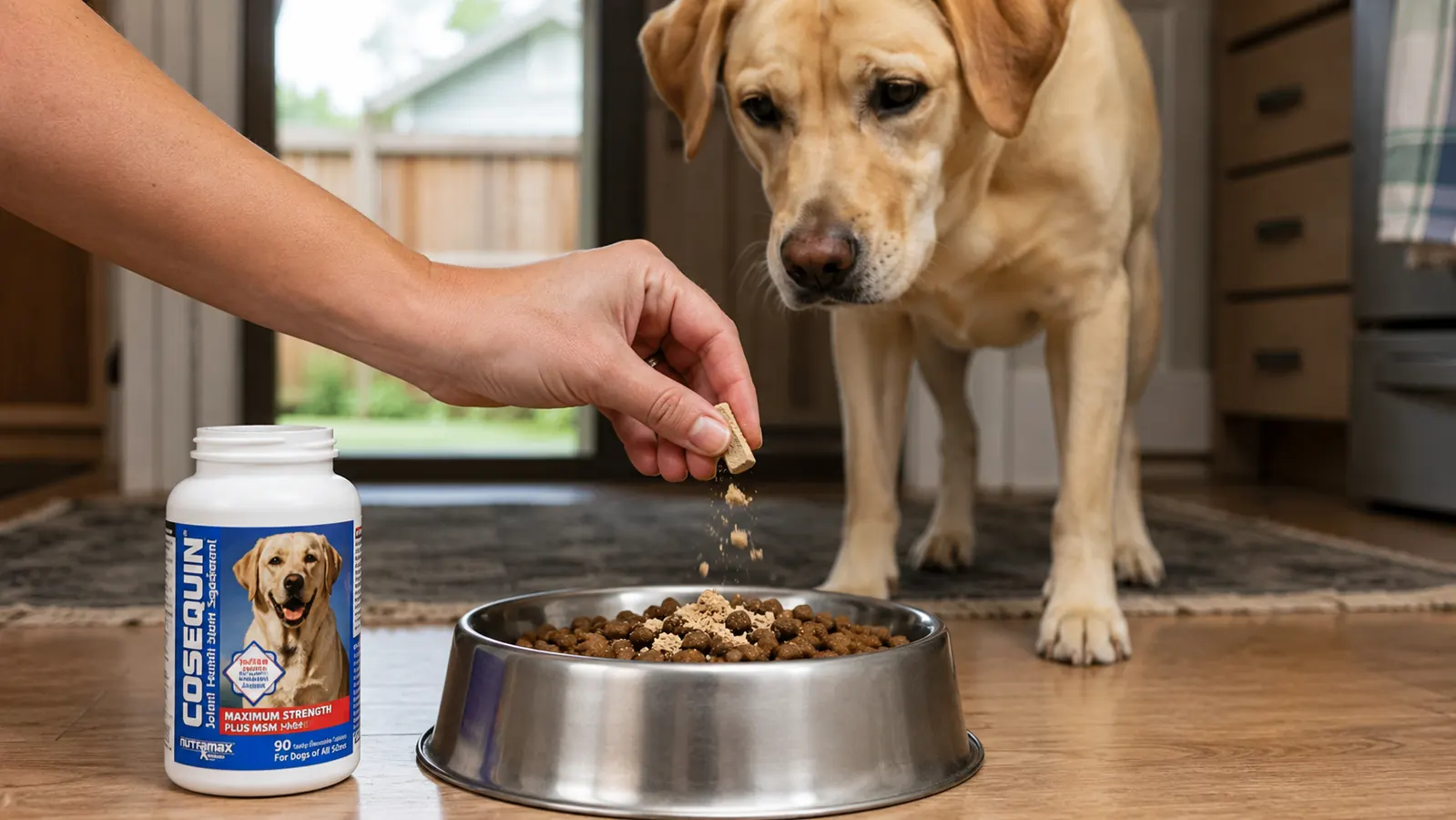
Cosequin is the one product in our house that isn't optional. It's glucosamine, chondroitin, and MSM in a chewable tablet, and my vet is the one who suggested I try it in the first place.
Amazon Check Today's Price on Amazon →Step 1: Get an Actual Diagnosis Before You Guess at Home Remedies
I know this is the least exciting step, and I almost skipped it myself the first time Maple started slowing down. I figured she was just getting old and left it at that for a few months. That was a mistake. When I finally took her in, our vet found some mild arthritis in her hips, which made total sense for a Beagle her age, but she also checked for other things that can look like stiffness from the outside, like a torn ligament, a spinal issue, or early signs of hip dysplasia.
Stiffness in an older dog can come from a lot of different places, and they are not all treated the same way. A dog with arthritis benefits from movement and joint support. A dog with a torn ligament needs rest and possibly surgery. Guessing wrong and pushing exercise on the wrong kind of injury can make things worse. So step one, before any supplement, ramp, or diet change, is a vet visit to actually name what you're dealing with.
This is also the point where you should ask your vet directly whether a supplement like Cosequin makes sense for your dog specifically, and what dose is right for their weight. Maple is around 24 pounds, and our vet gave me a specific daily amount based on that. Every dog's situation is different enough that this isn't something I'd recommend guessing on from a bag label alone.
One more thing worth flagging: if your dog suddenly can't put weight on a leg, cries out when touched, or the stiffness comes on overnight instead of gradually, that's not a wait-and-see situation. That's a call your vet the same day situation. Gradual, mild morning stiffness is what the rest of this guide is aimed at.
Step 2: Build Gentler, More Frequent Movement Into Her Day
Once we knew what we were dealing with, the advice was almost the opposite of what I expected. I thought a stiff dog needed to rest more. Instead, our vet explained that moderate, consistent movement actually helps keep arthritic joints from getting worse, while long stretches of total rest let everything stiffen back up. The trick is frequency over intensity.
For Maple, that meant swapping one long walk for two or three shorter ones spread through the day. She still gets her regular loop around the block with Biscuit, our Lab mix, but I've shortened it and added a second short walk in the afternoon instead of trying to cram it all into one outing. She noticeably moves easier on the second walk than she did first thing in the morning, which tells me the joints genuinely warm up.
I also stopped letting her sprint after squirrels the way she used to as a younger dog, even though she clearly still wants to. Quick starts and hard stops are harder on stiff joints than steady walking. It's a small thing, but redirecting that energy into a calmer pace has made a visible difference in how she moves the rest of the day.
I've also started giving her a slow five minutes of easy walking around the living room before we head out the door in the morning, sort of a warm-up lap before the real walk. It sounds silly, but it seems to loosen her up before she hits the colder outside air, and I'd rather do that than have her stiffly limp through the first block outside.
Step 3: Keep Her at a Healthy Weight, Even If It Means Measuring Food
This one is boring but it matters more than almost anything else on this list. Extra weight puts direct pressure on already sore joints, and I learned that the hard way when Maple crept up a few pounds during a stretch where I was giving her too many treats out of guilt for her being uncomfortable. Once our vet pointed out the weight gain at a checkup, I started actually measuring her food again instead of eyeballing it.
I switched her treats to smaller pieces and started using some of her regular kibble as training rewards instead of extra snacks on top. Biscuit, being food-motivated the way he is, will happily finish anything Maple doesn't eat, so I have to be careful that her portions stay separate and consistent. It sounds unrelated to stiffness, but a leaner senior dog moves noticeably easier than one carrying extra pounds on the same joints.
I keep a cheap kitchen scale by her food bin now, and I weigh her myself once a month by stepping on the bathroom scale holding her, then subtracting my own weight. It takes thirty seconds and it's caught small creep before it turned into a real problem more than once.
Step 4: Add a Daily Joint Supplement and Actually Stick With It
This is the step that took the longest to show results, and honestly the one I almost gave up on too early. Cosequin uses glucosamine, chondroitin, and MSM, which are the same three ingredients you'll see recommended again and again for joint support in dogs. They're meant to support the cartilage and joint fluid that naturally break down over time, not to numb pain the way a medication would.
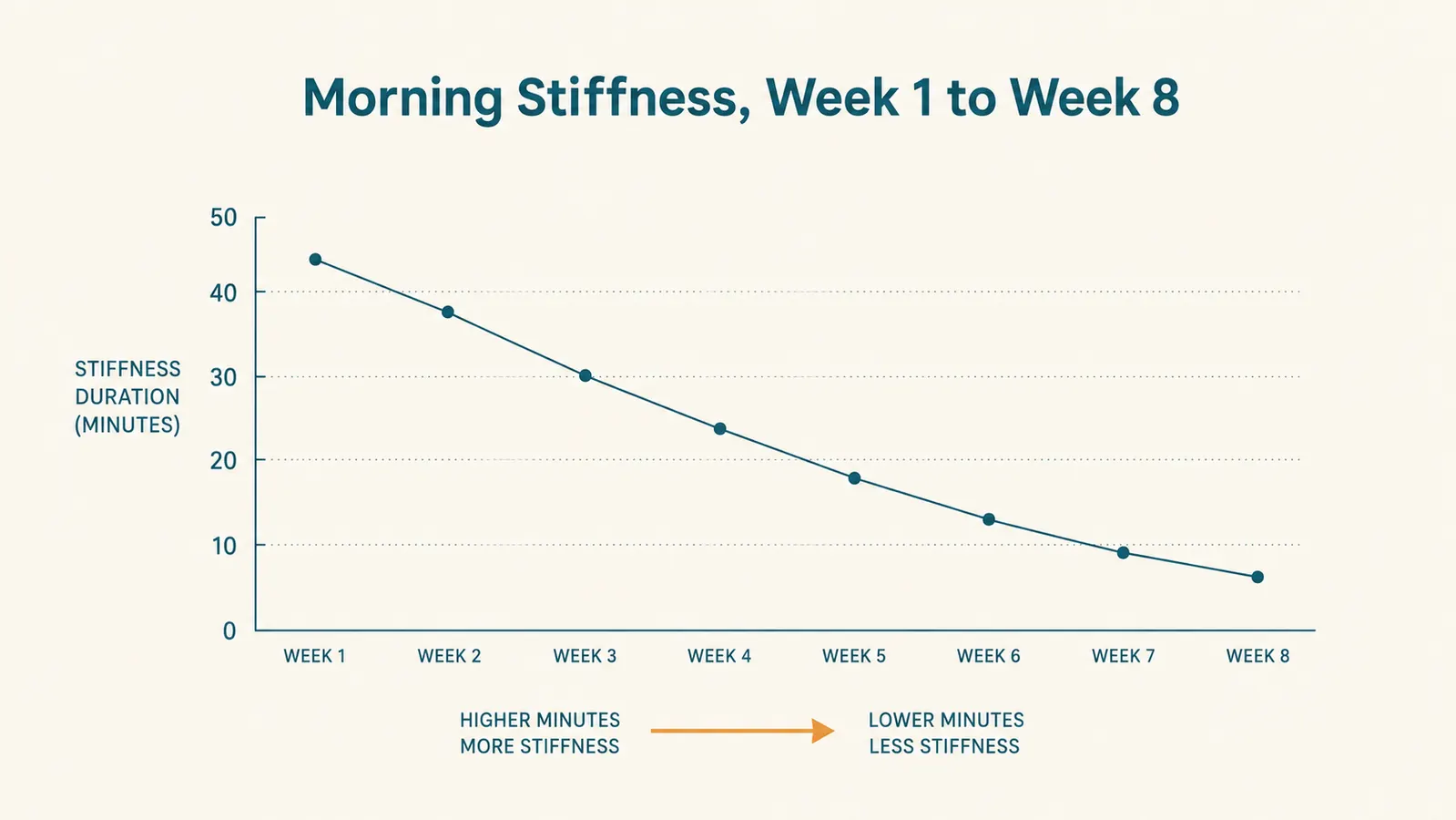
The chewable tablets are easy to work into a routine, which matters a lot if you're juggling a full-time job like I am and need something you won't forget. I crumble Maple's tablet over her morning kibble so it's just part of breakfast, no separate step, no fighting her to take a pill. It took a good six to eight weeks of daily use before I felt confident saying she was moving better, not overnight, and I want to be honest about that timeline instead of promising something faster.
What I can say now, close to a year in, is that her morning stiffness is shorter and less severe than it was before we started, and she's kept up her two-walks-a-day routine without much complaint. I don't think of it as a fix. I think of it as one piece of a routine that, combined with the movement and weight changes above, has made a real difference in how she starts her day.
For what it's worth, Cosequin isn't some niche product I stumbled onto. It's sitting at close to 80,000 reviews and a 4.7 average rating on Amazon, which tells me a lot of other households are running the same daily experiment I was and landing on the same conclusion.
Step 5: Make Small Changes at Home So Her Joints Don't Have to Work as Hard
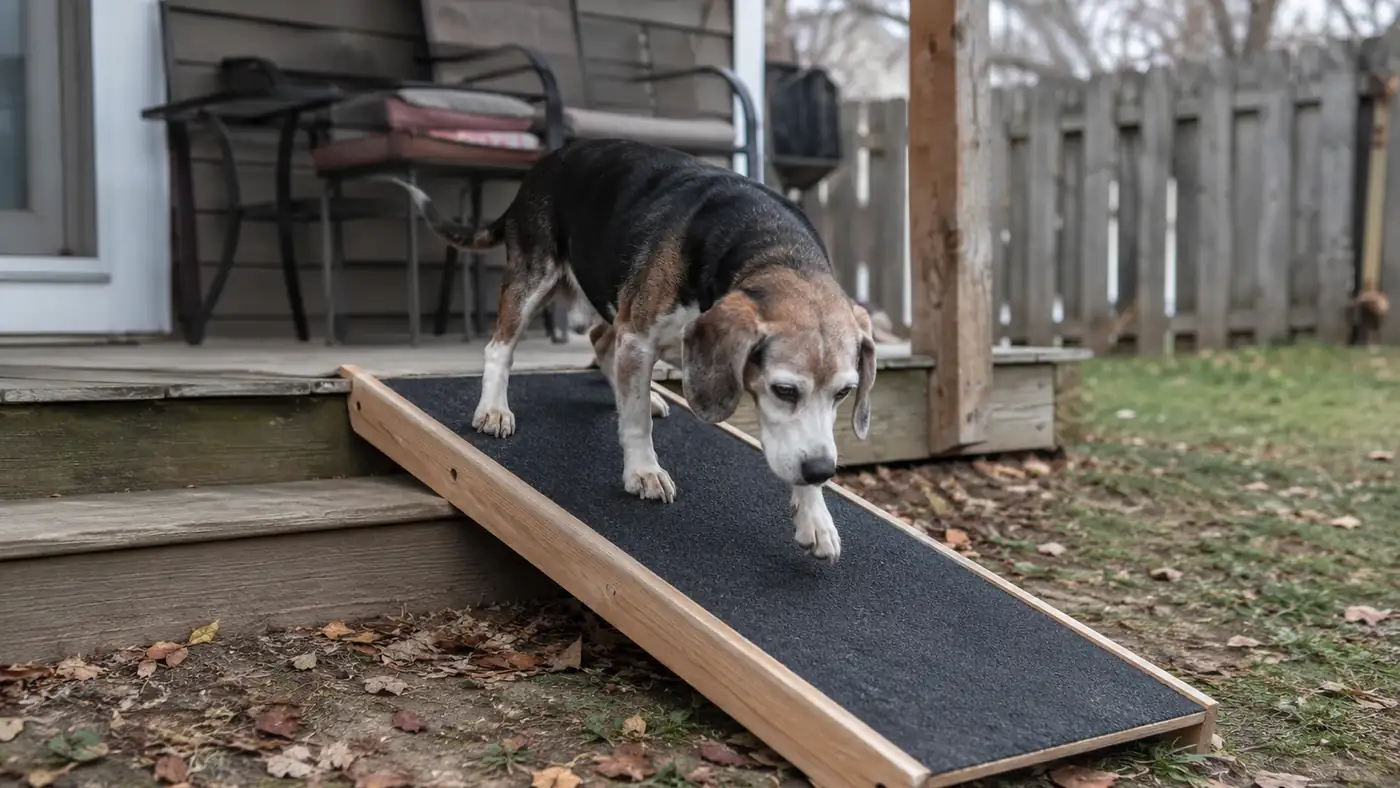
A few cheap changes around the house have helped as much as anything on this list. We added a low ramp over the back porch steps so Maple doesn't have to hop down into the yard, which used to be the moment I'd see her wince the most. It took her a couple of days to trust it, but now she uses it without hesitation.
Inside, I moved her water and food bowls off the hard tile and onto a rubber mat so her feet don't slip while she's eating, and I picked up a thicker orthopedic bed instead of the flatter one she'd used for years. Rugs on our hardwood floors have helped too, since slick floors are genuinely hard on a dog with weaker back legs. None of these changes cost much, but together they mean she's not fighting her environment on top of the stiffness itself.
I also picked up a set of grippy traction socks for the handful of days our floors get slick after mopping. Maple hated them for about a day and a half, then more or less forgot she had them on. It's a small purchase, but it's one less thing for her back legs to fight against on an already stiff morning.
What Else Helps
A few extras that aren't strictly necessary but have made a noticeable difference for Maple: a warm towel on her hips on especially cold mornings, gentle massage along her lower back while she's relaxed on her bed, and, if your vet approves it, supervised swimming, which lets a dog move joints without full body weight pressing down on them. None of these replace the steps above, but they round things out on the harder days.
I've also started mixing a little wet food with omega-3s into her regular kibble a few nights a week, something our vet suggested as another small piece of joint support alongside the supplement. And oddly enough, even Pepper, our tabby, seems to pick up on Maple's harder mornings. She tends to give Maple a wider berth and skip her usual habit of pestering her for space on the couch, which is about as close to sympathy as a cat gets in our house.
I'd also mention that consistency beats intensity across every single one of these steps. Skipping her supplement for a week here and there, or letting a walk slide for days at a time, seems to undo progress faster than I expected. The routine only works because it's actually a routine.
The morning I noticed Maple walk straight to the door instead of shuffling to it, I realized the small daily stuff had actually added up to something.
If you try all of this and your dog's stiffness isn't easing up after a couple of months, or it starts getting worse instead of better, that's your cue to go back to the vet rather than adding more home remedies on top. These steps are meant to support a diagnosed, mild case of age-related stiffness, not to treat something more serious on their own.
Ready to build this into your own dog's morning routine?
If your senior dog is showing the same kind of morning stiffness Maple did, talk to your vet about whether a daily glucosamine and chondroitin chewable like Cosequin fits into their care plan.
Amazon Check Today's Price on Amazon →