
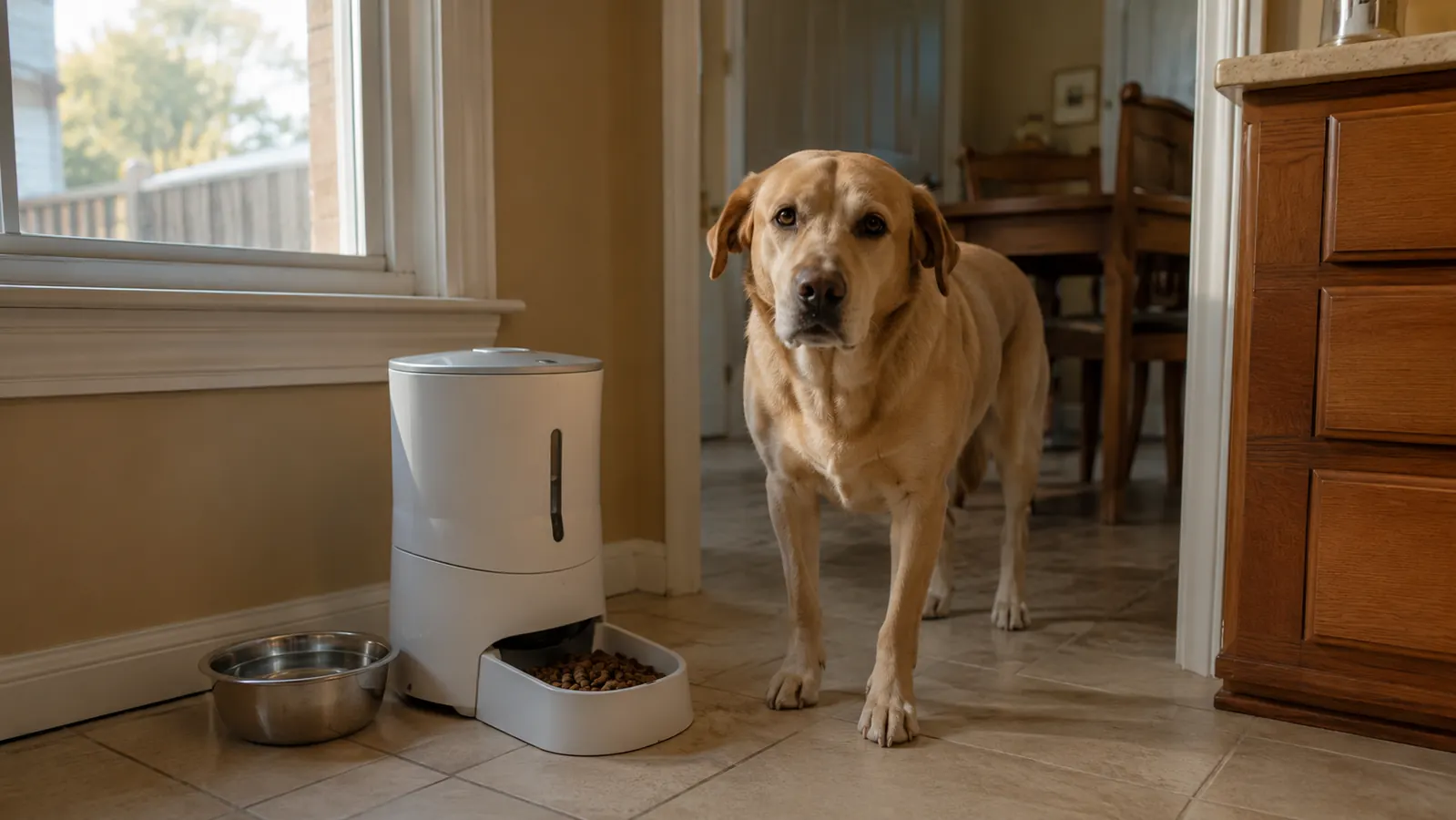
When my alarm doesn't go off and I've got fifteen minutes to get out the door, the fastest way to derail my whole morning used to be Biscuit staring up at me with his empty bowl like I've personally wronged him. I've fed dogs and cats by hand my entire adult life, scooping kibble at roughly the same time every day for going on twenty years. So when I finally set up the PetSafe Automatic Dog Feeder, the 5-meal, 40 oz version, at my house, I wasn't looking to replace myself as the feeder. I was curious whether a machine could actually hold up its end of a job I'd always done myself, and whether it would change anything about how well I actually know what my animals are eating.
Here's the short version if you're trying to decide between the two right now. The PetSafe feeder wins on consistency, especially if your household runs on unpredictable mornings or you've got a dog like Biscuit who will absolutely overeat given the chance. Manual feeding wins on cost, on having zero moving parts that can jam or lose power, and on that one daily minute where I'm actually watching my dogs eat, which is honestly how I first noticed Maple was skipping breakfast last winter. Neither one is wrong. They just solve different problems, and most households I know end up doing some version of both, whether they admit it or not.
| PetSafe Automatic Feeder | Feeding by Hand | |
|---|---|---|
| Cost Over Time | One upfront cost for the unit, no recurring parts to replace | No equipment cost at all, just the bag of kibble you're already buying |
| Portion Accuracy | Fixed 1-cup compartments, the same amount dispenses every single time | Depends entirely on how careful, or rushed, I am with the scoop that day |
| Consistency When Life Gets Busy | Feeds on schedule even if I'm running late, stuck in traffic, or forget | Only as reliable as I am that particular morning |
| Failure Points | Batteries can die, the motor can jam on stale or oddly shaped kibble | None. A bowl and a scoop don't have parts that break |
| Daily Monitoring Moment | Easy to walk past the bowl without really looking at what got eaten | I see exactly how much each pet ate and notice right away if someone's off their food |
| Multi-Pet Households | Good for staggering Pepper's smaller portion away from the dogs' mealtime scramble | Requires me to physically separate pets and supervise so nobody steals another's food |
| Weight and Diet Control | Locks portions so nobody free-feeds or talks their way into seconds | Easy for a food-motivated dog like Biscuit to guilt an extra half-scoop out of you |
| Setup and Learning Curve | Takes a few tries to get the schedule and portion sizes dialed in right | Nothing to learn, most of us have been doing this since childhood |
Where the PetSafe Feeder Wins
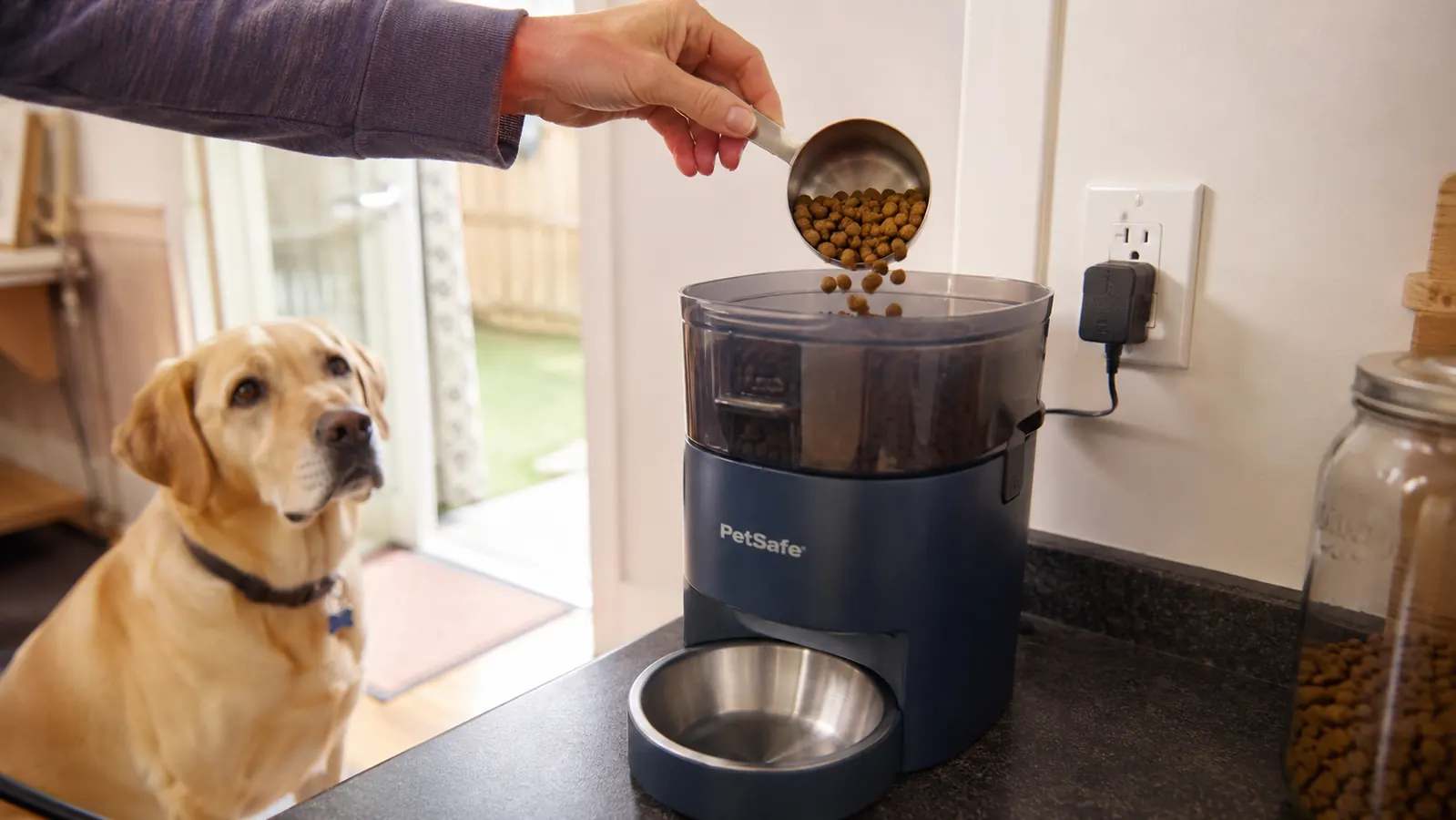
The single biggest thing the feeder fixed at my house is consistency, and specifically consistency around Biscuit's weight. He's a Lab mix, which means he approaches every meal like it might be his last, and if I'm even a little distracted while scooping, he ends up with more than his cup. The feeder's compartments hold exactly one cup each, so there's no eyeballing it and no negotiating. Once I load the tray and set the schedule, five meals go out at five set times whether I'm home, running late, or picking up an extra shift at work.
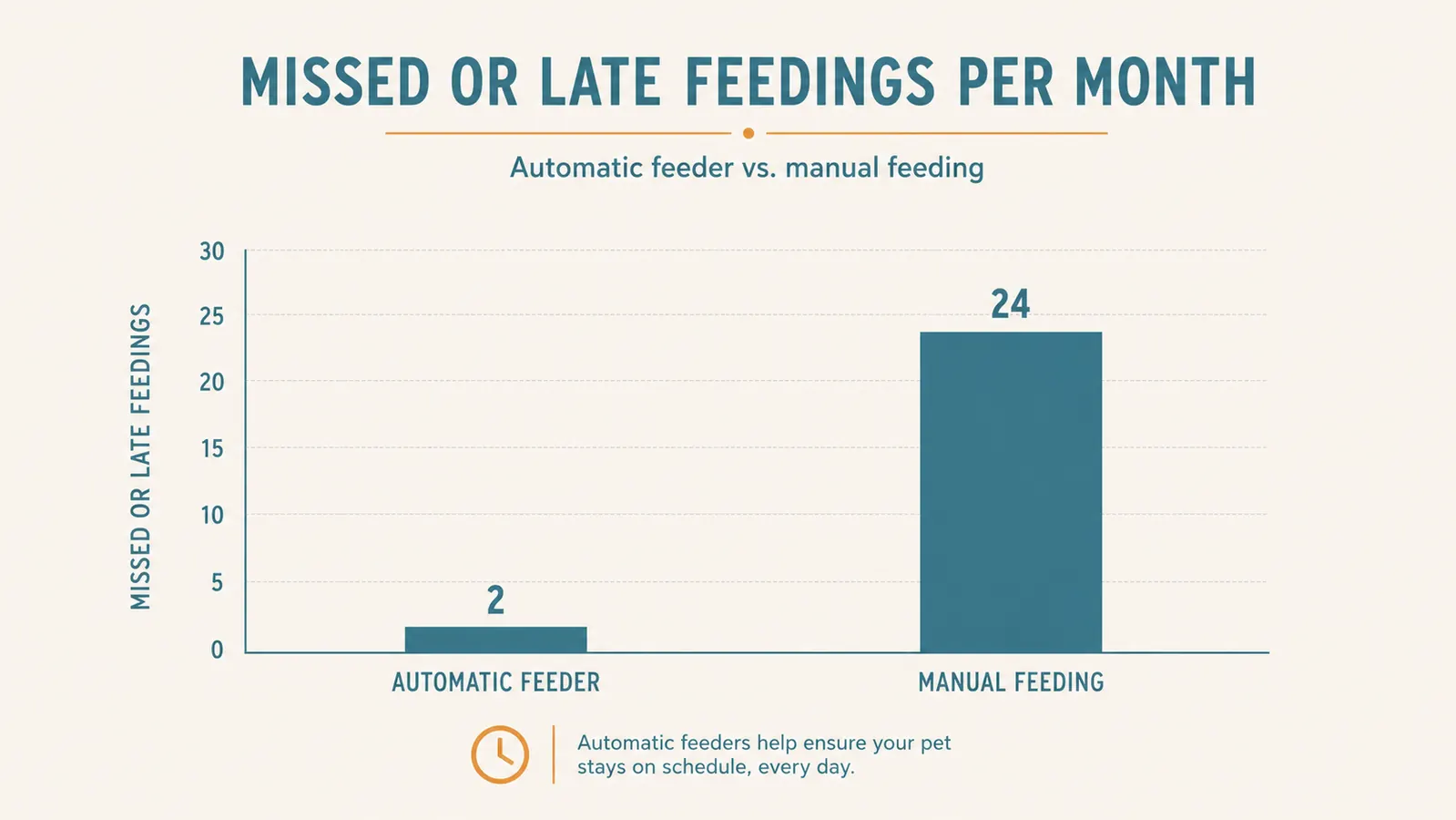
It also earns its keep on the mornings that actually go sideways. I work full time, and there have been more than a few days where I've hit snooze twice and left the house without even seeing the dogs. Before the feeder, that meant a late breakfast for everybody and Biscuit pacing by his bowl until I got home for lunch. Now the feed-now button and the programmed schedule mean nobody's waiting on my alarm clock to eat. That single change did more for my morning stress than I expected it to.
It runs on batteries as a backup even if you keep it plugged in, which matters more than I realized the first time we lost power for a few hours during a storm. The dogs still got fed on schedule without me having to think about it, and that's the kind of quiet reliability you don't appreciate until the alternative is standing in the dark trying to remember where you keep the flashlight and the dog food at the same time.
Where Manual Feeding Wins
Manual feeding wins on the things a machine can't really compete with. It costs nothing beyond the food itself, there's no hopper to jam, no batteries to check, and nothing electronic that can fail on you at 6 a.m. when you're already running behind. I've hand-fed dogs and cats through some genuinely dead-broke years, and a bag of kibble and a measuring cup were always going to work, storm or no storm, power outage or no power outage.
But the part I underestimated is the monitoring. Standing at the bowl every morning and evening means I actually see what's happening with my animals. Last winter, Maple, my senior Beagle, started leaving a little food in her bowl most mornings. I only caught it because I was standing right there watching her eat, and that small thing was an early flag that her joints were getting stiffer and she was less interested in getting up right away. A machine dispensing food on a timer wouldn't have shown me that. It just would have kept dispensing, and I'd have found out later, and later isn't when you want to find out.
There's also just no learning curve. Manual feeding doesn't need an app, a battery check, or a manual you'll lose in a kitchen drawer within a week. You open a bag, you fill a cup, you set it down. If you're feeding one dog on a normal schedule and you're usually home for meals anyway, there's a real argument that a machine is solving a problem you don't actually have.
The feeder never lies to me about the schedule. Standing there with the scoop is the only way I actually notice when something's wrong.
Tired of mornings running your feeding schedule instead of the other way around?
If chaotic mornings or a food-motivated dog are the real problem at your house, the PetSafe Automatic Dog Feeder handles the portion control and the schedule so you don't have to remember either one.
Amazon Check Today's Price on Amazon →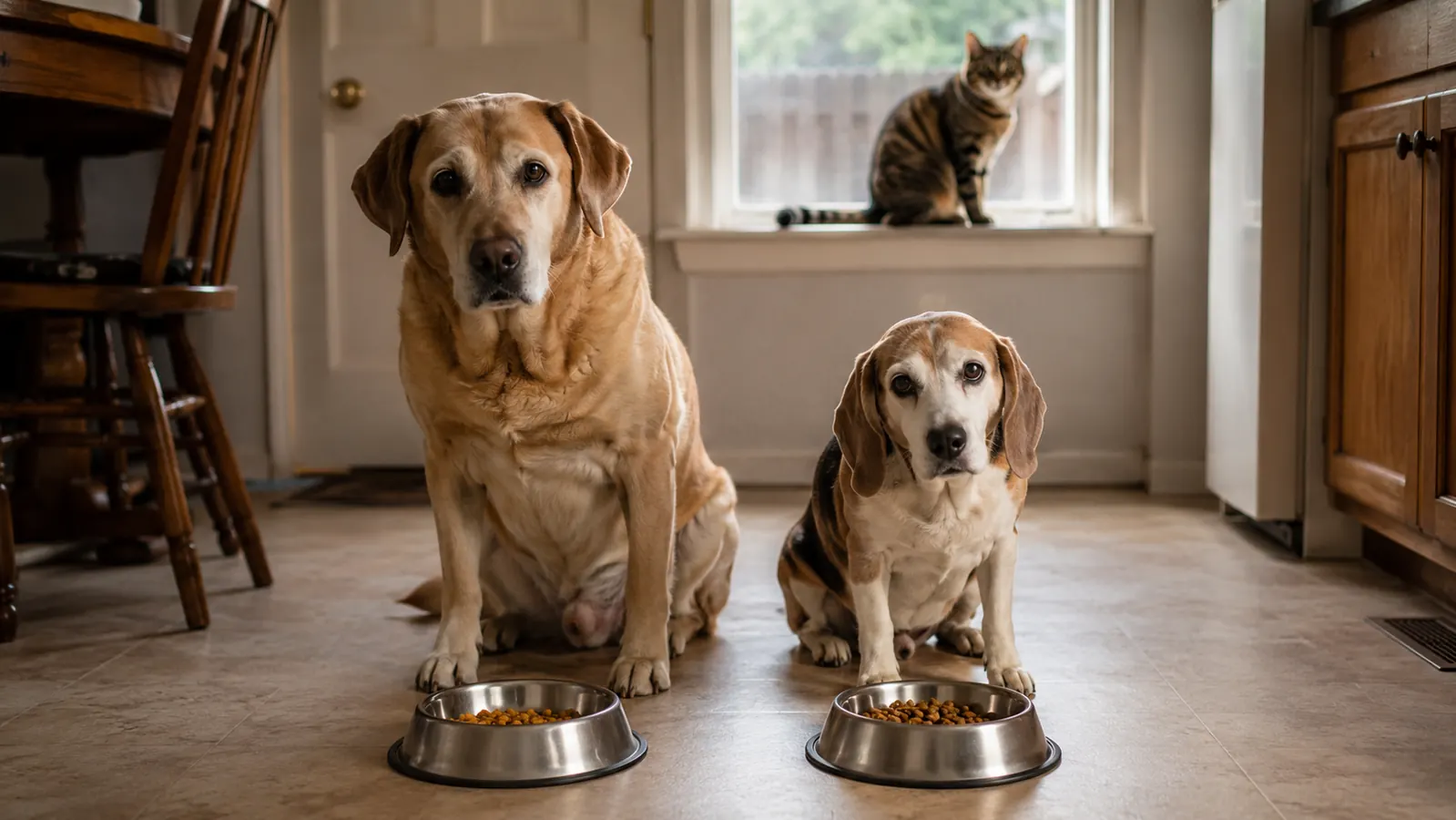
The Cost Question, Without the Sticker Shock
I know cost matters, especially for anyone weighing this decision on a tight budget like I do. I won't quote you an exact number here because Amazon prices move around and whatever I type today could be stale by the time you're reading this, but I'll say it plainly. The feeder is a one-time purchase, not a subscription, and there's nothing recurring beyond replacing batteries occasionally if you're not keeping it plugged in. Compare that to manual feeding, which has zero equipment cost at all, and the honest answer is that manual feeding will always be the cheaper option on paper. The feeder is paying for convenience and consistency, not for savings.
Where I think the math actually changes in the feeder's favor is if you've got a dog prone to overeating, because a machine that locks portions can genuinely save you money on vet bills and food down the road. Biscuit would eat an entire bag in one sitting if I let him, and every extra pound on a Lab mix is extra strain on his joints later in life. Paying once for portion control has been worth more to me than the upfront cost suggests.
What This Looks Like At My House
I didn't end up picking one and ditching the other, which surprised me a little. The feeder handles breakfast now, the meal most likely to get skipped or rushed on a weekday, and I still hand-scoop dinner myself most nights. That's when I'm home anyway, and it's the meal where I actually stand in the kitchen with Biscuit and Maple while Pepper supervises from the counter, deciding whether either dog's food looks more interesting than her own. Splitting it that way gave me the consistency I needed during the part of the day I have the least control over, without giving up the part of the day I actually enjoy.
The one adjustment period was getting the portion sizes right for three very different appetites under one roof. Biscuit could eat a full bag in a sitting if you let him, Maple eats slower and less since she's gotten older, and Pepper isn't part of the dog feeder's rotation at all, she gets her own smaller bowl on the counter where the dogs can't reach it. Once I had the compartments loaded correctly for the dogs' actual portions, not what I assumed they should eat, the whole system settled into something I don't think about most days.
I also had to get used to checking the hopper every few days instead of every time I fed the dogs. It's an easy habit to build, but it's a different habit than the one I'd had for twenty years, and I'd be lying if I said the first couple weeks didn't have me double-checking the tray out of pure paranoia that it hadn't dispensed. It always had.
A Few Practical Things I Would Tell You Before You Buy
The tray comes apart and the lid lifts off for cleaning, which matters more than you'd think if you're feeding wet-adjacent kibble or living somewhere humid. I run mine through a quick wipe-down about once a week, and the compartment lid keeps most of it dry between fillings. It's not dishwasher-fussy, but it's also not a set-it-and-forget-it-forever situation the way a plain bowl is. You still have to check on it.
I'd also tell you not to assume it works perfectly out of the box for your specific food. Very small kibble or oddly shaped treats can sit differently in the compartments than a standard-size dry food, so the first week is worth watching closely rather than trusting it blind. Once I confirmed Biscuit and Maple's food dispensed clean every time, I stopped double-checking, but that trust took a little while to earn, and I think that's a fair trade for what it's replaced.
Who Should Buy Which
If your mornings are unpredictable, if you've got a dog who overeats given the chance, or if you're feeding multiple pets different portions, the PetSafe feeder solves real problems and it's worth the upfront cost. If you're home for most meals, you're on a tight budget, or you'd rather not add one more electronic thing to maintain, manual feeding still works fine, and it always will. I'd just say don't let it replace every single meal. Keep at least one feeding a day where you're standing there with the scoop, because that's the moment you'll actually notice if something's off, whether that's a dog favoring a leg or a bowl that's staying fuller than it should.
Ready to stop stressing about who fed the dog this morning?
The PetSafe Automatic Dog Feeder keeps portions consistent and meals on schedule, even on the mornings that don't go as planned.
Amazon Check Today's Price on Amazon →